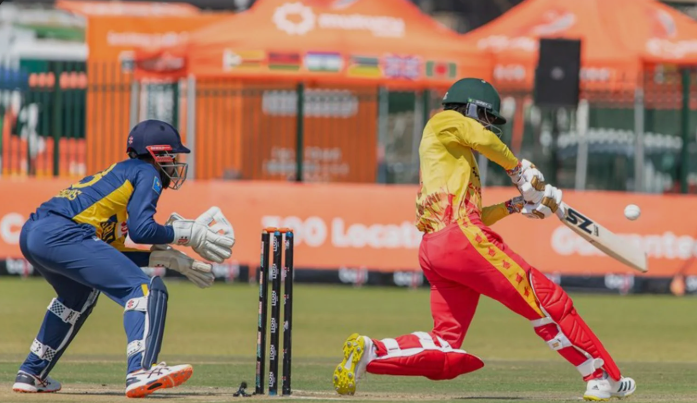
The rivalry between the Sri Lanka National Cricket Team and the Zimbabwe National Cricket Team has grown through decades of uneven battles, tactical evolution, and moments of genuine competitiveness. While Sri Lanka have historically dominated most encounters with their world class spin attack and technically strong batting lineup, Zimbabwe have often shown resilience through individual brilliance and fighting spirit. From early ODI meetings in the 1990s to modern limited overs clashes, this timeline reflects more than just results. It captures changing eras of cricket, shifting team strategies, and emotional highs and lows. Each match added a new layer to a rivalry built on experience, learning, and occasional surprises that kept fans engaged.
Latest Matches (2025–2026)
Date
Format
Venue
Winner
Margin
Key Performers
Feb 19, 2026
T20I
Colombo
Zimbabwe
6 wickets
Brian Bennett 63, Sikandar Raza 45
Nov 25, 2025
T20I
Rawalpindi
Sri Lanka
9 wickets
Pathum Nissanka 98
Nov 20, 2025
T20I
Rawalpindi
Zimbabwe
67 runs
Sikandar Raza Match MVP
Sep 07, 2025
T20I
Harare
Sri Lanka
8 wickets
Kamil Mishara, Kusal Mendis
Sep 06, 2025
T20I
Harare
Zimbabwe
5 wickets
Sikandar Raza, Blessing Muzarabani
Sep 03, 2025
T20I
Harare
Sri Lanka
4 wickets
Kamindu Mendis, Pathum Nissanka
Aug 31, 2025
ODI
Harare
Sri Lanka
5 wickets
Pathum Nissanka, Kusal Perera
Aug 29, 2025
ODI
Harare
Sri Lanka
7 runs
Dilshan Madushanka, Kusal Mendis
Head-to-Head Evolutions (All-Time Stats)
Format
Total Matches
Sri Lanka Wins
Zimbabwe Wins
No Result / Draws
Test
20
14
0
6
ODI
61
47
12
2
T20I
12
8
4
0
Total
93
69
16
8
Top Performances
Category
Player (Team)
Record Details
Match & Year
Highest Test Score
Marvan Atapattu (SL)
249 runs
Galle, 2001
Highest ODI Score
Tillakaratne Dilshan (SL)
144 runs
Pallekele, 2011
Best ODI Bowling
Chaminda Vaas (SL)
8/19 World Record
Colombo, 2001
Highest T20I Score
Pathum Nissanka (SL)
98 runs
Rawalpindi, 2025
Top Zim T20I Knock
Brian Bennett (ZIM)
63 runs
Colombo, 2026
Top Zim All-Rounder
Sikandar Raza (ZIM)
45 runs and 0/36
Colombo, 2026
Biggest Wins & Closest Matches
Scenario Type
Match Context
Final Scorecards
Margin / Outcome
Biggest Test Win
Asian Test Championship
SL 583/9d vs ZIM 236 and 175
SL won by an innings and 172 runs
Biggest ODI Win
Zim Tri-Series
ZIM 118 all out vs SL 119/1
SL won by 9 wickets with 208 balls left
Biggest T20I Win
T20 Tri-Series
ZIM 162/8 vs SL 95 all out
ZIM won by 67 runs
Closest ODI Finish
Sri Lanka Tour of Zim
SL 298/6 vs ZIM 291/8
SL won by 7 runs
Closest T20I Finish
Bilateral Series
SL 173/6 vs ZIM 178/6
ZIM won by 4 wickets with 1 ball remaining
Closest T20I Finish
World Cup Group Stage
SL 178/7 vs ZIM 182/4
ZIM won by 6 wickets with 3 balls remaining
Early Encounters and First Official Meetings
The first meetings between Sri Lanka and Zimbabwe set the tone for a one sided but learning driven rivalry. Sri Lanka entered international cricket with stronger spin depth and more experienced batting, while Zimbabwe were still finding consistency at the top level. Their early ODI and Test clashes showed Sri Lanka’s ability to control long passages of play, especially through disciplined bowling and patient batting partnerships. Zimbabwe, however, showed glimpses of resistance through fighting knocks from senior players who refused to be overwhelmed. These early games were less about rivalry intensity and more about Zimbabwe gaining exposure against a technically superior side. Over time, these matches created the foundation for future competitiveness, as Zimbabwe slowly adapted to Sri Lanka’s spin heavy approach and developed strategies to counter it in limited overs cricket.
Season
Matches
Winner Trend
Key Performance
Notes
1992
2 ODIs
Sri Lanka dominant
Spin control impact
Early international exposure
1994
3 ODIs
Sri Lanka dominant
Top order stability
Zimbabwe batting resistance
1996
2 Tests
Sri Lanka strong
Batting partnerships
Experience gap visible
1998
3 ODIs
Sri Lanka dominant
Bowling consistency
Zimbabwe improving slowly
Sri Lanka’s Early Dominance and Zimbabwe’s Fightback Attempts
As the rivalry progressed, Sri Lanka firmly established control across formats. Their ability to build long innings and defend totals with world class spin made them a difficult opponent. Zimbabwe, though improving, often struggled against quality middle overs bowling and lacked the depth to chase big targets. However, this phase also included moments where Zimbabwe surprised Sri Lanka with disciplined bowling spells and counter attacking innings. These fightbacks, while not always resulting in wins, showed that Zimbabwe were evolving tactically. Sri Lanka’s dominance was not just about skill but also about adaptability to conditions in the subcontinent and away tours. This phase built a clear pattern where Sri Lanka dictated tempo, while Zimbabwe searched for breakthroughs through individual brilliance rather than collective dominance.
Season
Matches
Winner Trend
Key Performance
Notes
1999
3 ODIs
Sri Lanka dominant
Spin attack control
Middle order strength
2001
2 Tests
Sri Lanka dominant
Batting endurance
Zimbabwe resilience
2003
4 ODIs
Sri Lanka strong
Chase efficiency
Occasional Zimbabwe upset
2005
3 ODIs
Mixed
All round efforts
Zimbabwe improvement phase
The 1990s Clashes That Defined Competitive Spirit and Emerging Rivalry Intensity
The 1990s marked the beginning of real competitive spirit between Sri Lanka and Zimbabwe. While Sri Lanka still held the upper hand, Zimbabwe started closing gaps through better bowling discipline and improved batting techniques. Matches during this period were often tighter, with smaller margins and more tactical battles. Sri Lanka relied heavily on experienced players who could anchor innings, while Zimbabwe depended on a few key performers to carry the team through pressure situations. World events during this decade also intensified the stakes, as both teams faced each other in ICC tournaments where every match carried qualification implications. These encounters slowly transformed the rivalry from one sided contests into more structured battles, laying the groundwork for future competitiveness in the 2000s.
Season
Matches
Winner Trend
Key Performance
Notes
1992
World Cup
Sri Lanka win
Bowling control
Early pressure match
1995
ODIs
Sri Lanka edge
Batting stability
Zimbabwe improved fielding
1996
World Cup
Sri Lanka win
Tactical dominance
Knockout pressure
1999
ODIs
Sri Lanka strong
Spin effectiveness
Close finishes emerging
World Cup Showdowns and High Pressure Matches in Global Tournaments
World Cup encounters between Sri Lanka and Zimbabwe brought a completely different level of pressure. These matches were not just bilateral contests but high stakes games influencing group standings and knockout qualification. Sri Lanka often relied on their experienced core to handle pressure, building innings carefully before accelerating in the final overs. Zimbabwe, meanwhile, played with unpredictability, sometimes shocking stronger teams with fearless batting or sharp bowling spells. These ICC tournament matches created some of the most memorable moments in the rivalry timeline, where individual performances often outweighed team form. The psychological pressure of World Cups also highlighted Sri Lanka’s composure compared to Zimbabwe’s inconsistency, yet Zimbabwe occasionally produced standout upsets that kept the rivalry alive and unpredictable.
Season
Matches
Winner Trend
Key Performance
Notes
1992 WC
1
Sri Lanka win
Controlled chase
Group stage dominance
1996 WC
1
Sri Lanka win
Strong batting
Knockout pressure
1999 WC
1
Sri Lanka win
Spin attack impact
Zimbabwe resistance
2003 WC
1
Sri Lanka win
All round balance
High pressure game
Batting Giants and Bowling Duels That Shaped
This rivalry has been shaped significantly by iconic players from both sides. Sri Lanka’s golden generation featuring Kumar Sangakkara, Mahela Jayawardene, and Muttiah Muralitharan created unmatched consistency in both batting and bowling departments. Their ability to control matches made Sri Lanka dominant across most encounters. On the Zimbabwe side, players like Andy Flower and Heath Streak stood out as world class performers who often carried the team in difficult situations. These individual battles added depth to the rivalry, as Zimbabwe’s stars frequently challenged Sri Lanka’s top performers in key moments. Spin versus technique, pace versus patience, and experience versus resilience defined this era. Many matches turned on individual brilliance rather than team dominance, making player matchups central to the rivalry narrative.
Season
Matches
Winner Trend
Key Performance
Notes
1998
ODIs
Sri Lanka win
Muralitharan spin
Flower batting impact
2000
Tests
Sri Lanka strong
Jayawardene stability
Streak bowling effort
2003
ODIs
Sri Lanka dominant
Sangakkara consistency
Zimbabwe fightback
2005
ODIs
Sri Lanka win
All round balance
Key player clashes
Modern Era Encounters and Tactical Evolution in Limited Overs Cricket
In the modern era, the Sri Lanka vs Zimbabwe rivalry evolved significantly with changes in limited overs cricket. Aggressive batting strategies, powerplay utilization, and data driven bowling plans changed how both teams approached matches. Sri Lanka adapted by strengthening their middle order hitting and introducing more flexible bowling combinations, while Zimbabwe focused on improving power hitting and building stronger opening partnerships. Despite Sri Lanka maintaining a clear advantage, Zimbabwe became more competitive in shorter formats, occasionally pushing Sri Lanka into tight finishes. Fitness standards, fielding quality, and strike rotation also became key tactical elements in this phase. The matches became faster, more dynamic, and less predictable compared to earlier decades.
Season
Matches
Winner Trend
Key Performance
Notes
2010
ODIs
Sri Lanka win
Powerplay control
Zimbabwe struggle
2014
T20s
Sri Lanka edge
Fast scoring
Competitive finishes
2018
ODIs
Sri Lanka win
Middle overs dominance
Zimbabwe improvement
2022
ODIs
Sri Lanka strong
Tactical bowling
Modern approach clash
Conclusion
The Sri Lanka vs Zimbabwe rivalry stands as a story of dominance, growth, and persistence across international cricket eras. Sri Lanka’s consistency, driven by legendary players and tactical superiority, ensured control in most encounters, especially in key ICC events and bilateral series. Zimbabwe, however, earned respect through determined performances and flashes of brilliance that challenged stronger opposition. Over time, the gap narrowed slightly in shorter formats, reflecting Zimbabwe’s development and Sri Lanka’s evolving strategies. Ultimately, this timeline showcases how international cricket rivalries are not always about equal wins, but about progress, pressure moments, and the spirit of competition that continues to define both teams’ journeys on the global stage.