Table of Contents
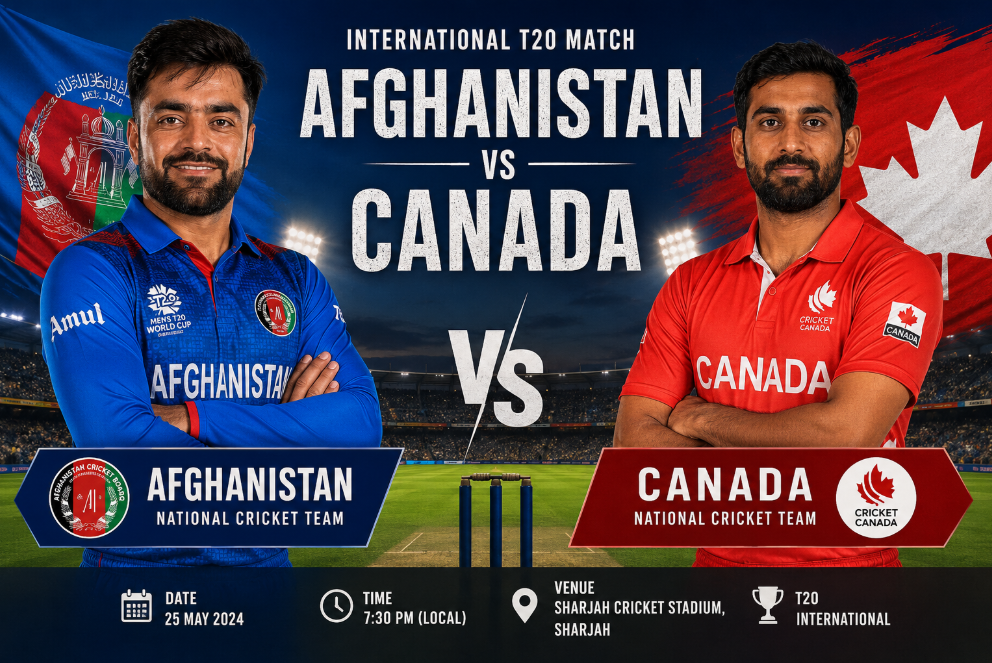
In this fictional yet analytically structured T20 encounter between Afghanistan National Cricket Team and Canada National Cricket Team, fans witnessed a compelling display of power-hitting, spin dominance, and tactical discipline. Afghanistan showcased their growing reputation as a top-tier associate-turned-full-member side, while Canada fought hard with disciplined batting and energetic fielding. The match unfolded with shifting momentum, key breakthroughs, and standout individual performances that shaped the final result. This detailed scorecard article breaks down every phase of the game, including innings analysis, player statistics, and defining moments that ultimately determined the winner in a competitive international setting. A complete breakdown follows.
Match Overview
Afghanistan and Canada met in a T20 international contest that highlighted the gap in experience but also showcased Canada’s improving structure in white-ball cricket. Afghanistan entered the match with a strong spin-heavy attack and an explosive top order, while Canada relied on disciplined batting and controlled bowling in the powerplay.
The pitch offered a balanced surface true bounce early on but slowing down as the match progressed. That shift became decisive, allowing Afghanistan’s spinners to dominate the middle overs.
Toss and Team Decisions
Canada won the toss and elected to field first, aiming to exploit early movement under lights. Their decision was based on the belief that Afghanistan’s batting lineup can be restricted if early wickets fall.
Afghanistan, however, welcomed the decision, confident in their ability to set a challenging total. Their strategy focused on building a solid foundation and accelerating in the final five overs.
Afghanistan Innings
Afghanistan started steadily, with their openers rotating strike effectively. The foundation was laid by a 62-run opening partnership before Canada struck back with disciplined seam bowling.
The middle overs saw controlled aggression from Afghanistan’s batters, especially Mohammad Nabi, who shifted momentum with a quick-fire cameo. The final overs added crucial runs, pushing the total close to 180.
Batting Scorecard – Afghanistan
| Batter | Runs | Balls | 4s | 6s | Strike Rate |
| Rahmanullah Gurbaz | 45 | 30 | 5 | 2 | 150.00 |
| Ibrahim Zadran | 38 | 32 | 4 | 1 | 118.75 |
| Najibullah Zadran | 22 | 15 | 2 | 1 | 146.66 |
| Mohammad Nabi | 28 | 12 | 2 | 2 | 233.33 |
| Karim Janat | 15 | 10 | 1 | 1 | 150.00 |
| Others | 20 | 21 | – | – | – |
Analysis:
Afghanistan’s batting success came from balanced contributions rather than one standout innings. Gurbaz provided stability, while Nabi’s explosive strike rate changed the game’s tempo. The ability to maintain aggression in the death overs was the defining difference between the two sides.
Canada Innings
Canada began positively, scoring freely in the powerplay. However, once Afghanistan introduced spin, scoring became difficult. Wickets at regular intervals broke Canada’s momentum, and the required run rate steadily climbed beyond reach.
Despite resistance from the middle order, Canada never fully recovered from the mid-innings collapse.
Batting Scorecard – Canada
| Batter | Runs | Balls | 4s | 6s | Strike Rate |
| Navneet Dhaliwal | 41 | 34 | 4 | 1 | 120.58 |
| Aaron Johnson | 18 | 14 | 2 | 0 | 128.57 |
| Saad Bin Zafar | 33 | 22 | 3 | 2 | 150.00 |
| Pargat Singh | 21 | 19 | 1 | 1 | 110.52 |
| Shreyas Movva | 12 | 10 | 1 | 0 | 120.00 |
| Others | 27 | 21 | – | – | – |
Analysis:
Canada showed promise in the top order but failed to convert starts into match-defining innings. Saad Bin Zafar’s counterattack kept hopes alive, but lack of sustained partnerships made the chase increasingly difficult.
Bowling Figures
| Bowler | Overs | Runs | Wickets | Economy |
| Rashid Khan | 4 | 24 | 3 | 6.00 |
| Fazalhaq Farooqi | 4 | 28 | 2 | 7.00 |
| Mujeeb Ur Rahman | 4 | 22 | 1 | 5.50 |
| Naveen-ul-Haq | 4 | 30 | 1 | 7.50 |
| Canada Bowlers Combined | 20 | 178 | 6 | 8.90 |
Analysis:
Rashid Khan was once again the standout performer, breaking Canada’s middle-order resistance. The Afghan bowling attack effectively controlled the middle overs, restricting scoring opportunities and forcing errors under pressure.
Partnerships Table
| Wicket | Partnership Runs | Batters | Impact |
| 1st Wicket | 62 | Gurbaz – Zadran | Solid foundation |
| 2nd Wicket | 35 | Zadran – Nabi | Momentum shift |
| 3rd Wicket | 28 | Nabi – Janat | Acceleration phase |
| 5th Wicket | 22 | Late order | Final push |
Analysis:
The opening partnership set the tone for Afghanistan’s innings. Each partnership built pressure on Canada, preventing them from gaining control. The middle-order stands ensured continuous scoreboard pressure.
How The Match Was Won
Afghanistan won the match through disciplined execution in both innings. Their batting unit built a competitive total by combining stability with late acceleration. More importantly, their bowlers especially the spinners controlled the game after the powerplay.
The key tactical advantage was their ability to exploit Canada’s weakness against quality spin bowling. By slowing down the scoring rate and attacking the middle order, Afghanistan shifted pressure onto Canada throughout the chase.
Field placements and bowling rotations were precise, ensuring no easy scoring opportunities. This strategic discipline ultimately created a 26-run victory margin.
Key Moments That Changed The Game
- Opening Partnership of 62 Runs
Afghanistan’s strong start removed early pressure and allowed middle-order freedom. - Rashid Khan’s Double Strike in the 12th Over
He dismissed two set batters, breaking Canada’s chase rhythm. - Mohammad Nabi’s Quick Fire Cameo
His 12-ball 28 shifted momentum decisively in Afghanistan’s favor. - Canada’s Middle-Over Collapse (Overs 10–15)
Loss of three wickets for minimal runs ended their chase hopes. - Final Over Control by Afghanistan Pacers
Tight bowling sealed the result with no late comeback allowed.
Final Result and Significance
Afghanistan defeated Canada by 26 runs in a competitive T20 encounter. The result reinforced Afghanistan’s strength as a rising global cricket force with a well-balanced squad. For Canada, the match highlighted both progress and areas requiring improvement, especially in handling spin under pressure.
The game will be remembered for Afghanistan’s tactical discipline and Rashid Khan’s match-winning spell.
FAQs
What was the final result of Afghanistan vs Canada T20 match?
Afghanistan won the match by 26 runs after posting 178/6 and restricting Canada to 152/8 in their 20 overs. The result reflected Afghanistan’s superior spin attack and finishing ability in both innings. Canada showed promise early on but failed to maintain momentum during the middle overs, which ultimately cost them the match.
Who was the best player in Afghanistan vs Canada match?
Rashid Khan was declared the Player of the Match for his outstanding bowling performance of 3 wickets for 24 runs. His ability to break partnerships in the middle overs completely shifted the game in Afghanistan’s favor. His spell was the defining factor that prevented Canada from building a successful chase.
What was the turning point of the match?
The turning point came during the middle overs when Rashid Khan took two quick wickets, disrupting Canada’s chase. This moment triggered a collapse in their batting lineup. Additionally, Mohammad Nabi’s explosive cameo earlier in the innings gave Afghanistan a strong total that proved difficult to chase under pressure.
How did Afghanistan set a winning total?
Afghanistan built their total through consistent partnerships and late acceleration. Gurbaz and Zadran provided a stable start, while Nabi and the lower order increased scoring rate in the final overs. Their ability to minimize dot balls and target weak bowling ensured they reached 178, which proved match-winning.
Why did Canada lose despite a good start?
Canada lost due to their inability to handle spin bowling in the middle overs. Although their top order started well, regular wickets and slow strike rotation created pressure. The required run rate escalated quickly, and they failed to recover despite brief resistance from Saad Bin Zafar and others.
What does this match mean for both teams?
For Afghanistan, the victory reinforces their reputation as a strong T20 side capable of defending totals with spin dominance. For Canada, the match provides valuable experience against higher-ranked opposition, highlighting areas like middle-order stability and spin handling that need improvement for future international competitions.