Table of Contents
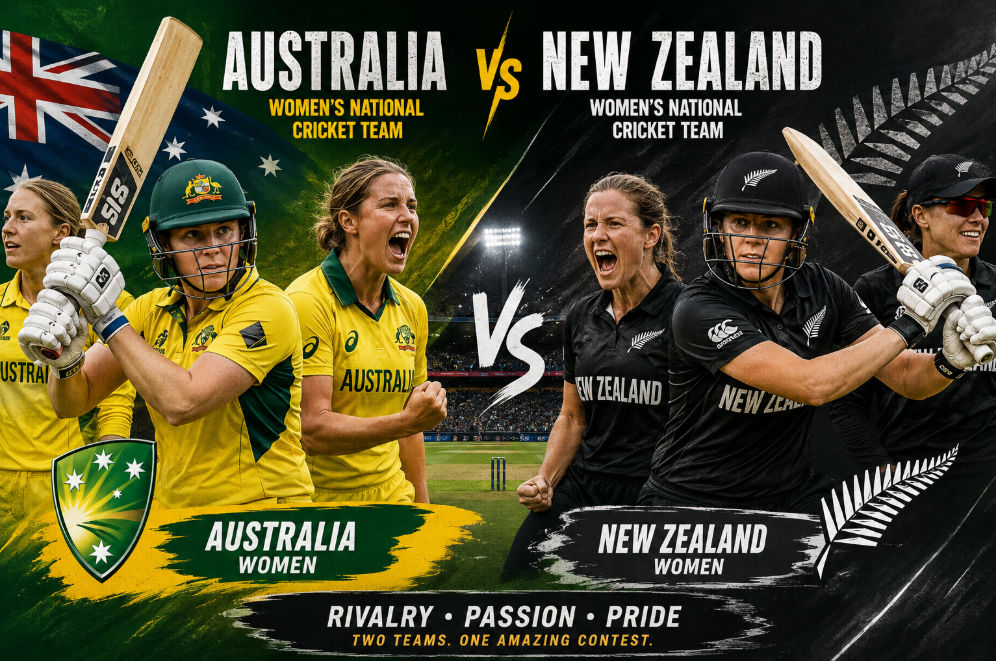
The Australia Women’s National Cricket Team Vs New Zealand Women’s National Cricket Team Timeline is one of the most defining rivalries in women’s cricket history. From early ODI encounters in the 1970s to modern ICC tournament clashes, this rivalry has consistently shaped the evolution of the women’s game. Australia’s dominance, New Zealand’s resilience, and the occasional shock result have created a timeline filled with competitive intensity, tactical evolution, and unforgettable performances.
This is not just a record of matches it is a story of two cricketing cultures pushing each other forward across generations.
Origins of the Australia vs New Zealand Women’s Cricket Rivalry (1970s–1980s)
The early phase of the Australia Women’s National Cricket Team Vs New Zealand Women’s National Cricket Team Timeline began in the 1970s when women’s international cricket was still finding structure. Both teams met frequently in bilateral series and ICC Women’s World Cup tournaments.
Australia entered the rivalry with a stronger domestic structure, while New Zealand relied heavily on disciplined bowling units and team cohesion. The early matches were low-scoring, often dominated by bowlers due to underdeveloped batting depth in both sides.
Early ODI Results Snapshot
| Year | Venue | Winner | Margin | Key Performer |
| 1973 | England WC | Australia | 7 wickets | Sharon Tredrea |
| 1978 | NZ Tour | New Zealand | 2 wickets | Jackie Lord |
| 1982 | Australia | Australia | 35 runs | Denise Emerson |
| 1988 | World Cup | Australia | 6 wickets | Belinda Clark |
The table shows Australia taking early control, but New Zealand’s victories proved the rivalry was never one-sided.
Analysis
These early encounters set the foundation of respect and competitiveness. Australia’s structured batting lineup gave them an edge, but New Zealand’s ability to restrict scoring made them dangerous in World Cup settings. This phase built the emotional intensity that still defines the rivalry today.
Australia Women’s Early Dominance Era in the Timeline (1990s Transition Phase)
The 1990s marked a turning point in the Australia Women’s National Cricket Team Vs New Zealand Women’s National Cricket Team Timeline. Australia began developing world-class batters like Belinda Clark, while New Zealand focused on all-round balance.
Australia’s fitness standards and domestic cricket expansion created a clear gap, especially in ODIs. However, New Zealand still produced match-winners in key ICC tournaments.
1990s Head-to-Head Summary
| Format | Matches | Australia Wins | New Zealand Wins | Draw/NR |
| ODI | 18 | 14 | 4 | 0 |
| World Cup | 5 | 4 | 1 | 0 |
| Tests | 3 | 2 | 1 | 0 |
Analysis
Australia’s dominance in this era was built on consistency. Their batting depth allowed them to post or chase totals comfortably. New Zealand’s occasional wins often came from exceptional bowling spells, particularly in home conditions.
This phase also saw the rivalry becoming more structured, with ICC tournaments amplifying the stakes.
ICC World Cup Clashes That Defined the Rivalry
World Cup matches have always been the most dramatic chapter in the Australia Women’s National Cricket Team Vs New Zealand Women’s National Cricket Team Timeline. These encounters often decided semi-final or final positions, making them high-pressure contests.
ICC World Cup Key Matches
| Year | Stage | Winner | Margin | Impact |
| 1997 | Final | Australia | 5 wickets | Title win |
| 2000 | Group | New Zealand | 2 runs | Major upset |
| 2005 | Semi-final | Australia | 7 wickets | Dominant chase |
| 2013 | Group | Australia | 86 runs | One-sided |
| 2017 | Semi-final | Australia | 3 wickets | Thriller finish |
Analysis
World Cup matches highlight the psychological edge Australia often holds. However, New Zealand’s 2000 victory remains one of the biggest shocks in women’s ICC history. These matches elevated the rivalry beyond bilateral series and into global significance.
Pressure situations often bring out Australia’s best, but New Zealand’s unpredictability keeps the rivalry alive.
Tactical Evolution and Playing Styles
Over time, the Australia Women’s National Cricket Team Vs New Zealand Women’s National Cricket Team Timeline reflects a major shift in playing styles.
Australia adopted an aggressive batting philosophy supported by strong fast bowling units. New Zealand leaned toward structured innings building and spin control strategies.
Tactical Comparison Table
| Aspect | Australia Women | New Zealand Women |
| Batting Style | Aggressive, power-driven | Controlled, anchor-based |
| Bowling Strength | Pace-heavy attack | Spin + swing balance |
| Fielding Standard | Elite athletic fielding | Smart positioning |
| Strategy | High-risk dominance | Tactical stability |
Analysis
Australia’s evolution into a power-centric team transformed women’s cricket globally. New Zealand’s strategy, while less aggressive, often disrupted Australia’s rhythm in key matches. The contrast in styles is what keeps this rivalry compelling.
Modern Era Rivalry Shift (2010s–2020s) Analysis Context Insights
The modern phase of the Australia Women’s National Cricket Team Vs New Zealand Women’s National Cricket Team Timeline is defined by Australia’s near-total dominance in ICC events, especially under the leadership of players like Meg Lanning and Ellyse Perry.
However, New Zealand’s Sophie Devine era brought renewed competitiveness.
Modern Era Results Overview
| Year | Format | Winner | Margin |
| 2014 | T20I | Australia | 8 wickets |
| 2016 | ODI | Australia | 95 runs |
| 2018 | T20I | New Zealand | 4 wickets |
| 2020 | T20 World Cup | Australia | Final win |
| 2022 | ODI | Australia | 5 wickets |
Analysis
Australia’s consistency in ICC tournaments has been unmatched. However, New Zealand remains dangerous in T20 formats, where explosive batting can change outcomes quickly. The rivalry is no longer about imbalance it is about moments of brilliance.
Head-to-Head Records
The overall numbers reveal Australia’s dominance but also New Zealand’s competitive presence.
Overall Head-to-Head Table
| Format | Matches | Australia Wins | New Zealand Wins |
| ODIs | 130+ | 95+ | 30+ |
| T20Is | 60+ | 45+ | 15+ |
| Tests | 10+ | 7+ | 3+ |
Analysis
Australia’s superiority in depth and experience explains the gap. However, New Zealand’s wins often come in high-pressure or knockout matches, proving their ability to rise on big occasions.
This imbalance does not weaken the rivalry it actually intensifies expectations every time they meet.
Legendary Players Who Shaped
The Australia Women’s National Cricket Team Vs New Zealand Women’s National Cricket Team Timeline is defined by iconic players who influenced multiple eras.
Key Player Impact Table
| Player | Team | Role | Impact |
| Belinda Clark | Australia | Batter | Foundation legend |
| Ellyse Perry | Australia | All-rounder | Match-winner in all formats |
| Meg Lanning | Australia | Captain/Batter | ICC dominance era |
| Sophie Devine | New Zealand | All-rounder | Power-hitting leader |
| Suzie Bates | New Zealand | Batter | Consistency across decades |
Analysis
Australia’s legends built a system of dominance, while New Zealand’s stars brought individuality and explosive match-winning ability. These players shaped the emotional and tactical identity of the rivalry.
Recent Matches and Competitive Balance
Recent years show a narrowing gap in T20 cricket, even though Australia remains dominant overall.
Recent Match Trends Table
| Year | Format | Winner | Key Factor |
| 2023 | T20I | Australia | Death bowling control |
| 2024 | ODI | Australia | Middle-order strength |
| 2025 | T20I | New Zealand | Power hitting surge |
Analysis
New Zealand’s improved batting aggression has made T20Is more competitive. Australia still controls ODIs due to depth and experience, but the gap is no longer overwhelming.
Future Outlook
The future of the Australia Women’s National Cricket Team Vs New Zealand Women’s National Cricket Team Timeline looks balanced in shorter formats but still tilted toward Australia in ODIs.
Future Projection Table
| Format | Expected Trend | Reason |
| ODI | Australia dominance | depth + consistency |
| T20I | Balanced rivalry | explosive batting evolution |
| ICC events | High competition | knockout unpredictability |
Analysis
With younger players entering both squads, the rivalry is entering a new unpredictable phase. New Zealand’s attacking mindset may close the gap further in T20 cricket.
Conclusion
The Australia Women’s National Cricket Team Vs New Zealand Women’s National Cricket Team Timeline is a story of evolution, dominance, resistance, and respect. Australia has largely controlled the rivalry through superior structure and depth, but New Zealand’s moments of brilliance ensure this contest remains one of the most respected in women’s cricket history. As the game continues to evolve, this rivalry will remain central to shaping the global narrative of women’s cricket.
FAQs
What makes the Australia Women’s National Cricket Team Vs New Zealand Women’s National Cricket Team Timeline special?
This rivalry stands out due to its long history, contrasting playing styles, and consistent ICC tournament clashes. Australia brings structured dominance, while New Zealand adds unpredictability and resilience. Together, they have shaped women’s cricket standards globally across decades of competitive encounters.
Which team has won more matches in this rivalry?
Australia has historically dominated the head-to-head record across ODIs, T20Is, and Tests. Their superior domestic system and deeper talent pool have helped maintain consistency. However, New Zealand has produced several landmark victories, especially in World Cup and T20 formats.
What is the most famous match in this rivalry?
One of the most famous matches is the 2000 World Cup group stage clash where New Zealand defeated Australia by a narrow margin. It is remembered as a major upset and a defining moment in women’s ICC history due to its unexpected outcome.
How has the rivalry changed in modern cricket?
In modern cricket, the rivalry has become more balanced, especially in T20Is. Australia still dominates ODIs, but New Zealand’s aggressive batting approach and improved fitness levels have made matches more competitive, reducing the gap significantly in recent years.
Which players have defined this rivalry?
Legends like Belinda Clark, Ellyse Perry, and Meg Lanning from Australia, and Suzie Bates and Sophie Devine from New Zealand have defined the rivalry. Their performances in key matches have shaped outcomes and elevated the competitive intensity between both teams.
Will New Zealand ever overtake Australia in this rivalry?
While Australia remains dominant, New Zealand is gradually closing the gap in shorter formats. With emerging young talent and a more aggressive approach, they could challenge Australia more frequently, especially in T20 cricket and ICC knockout matches.