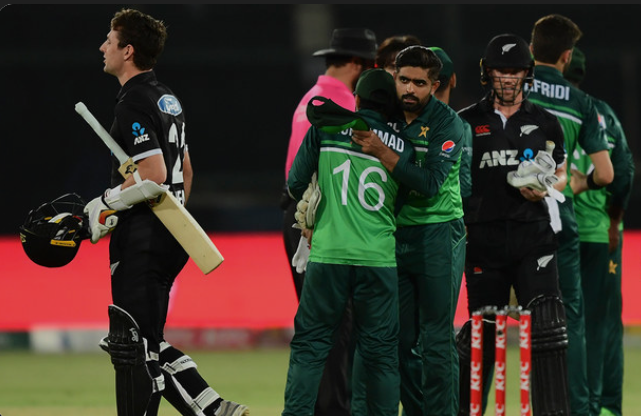
The cricket rivalry between the New Zealand National Cricket Team and the Pakistan National Cricket Team has grown into one of the most intriguing matchups in international cricket. It is a battle defined not just by runs and wickets, but by contrasting cricketing cultures. New Zealand brings discipline, structure, and calm execution under pressure, while Pakistan delivers flair, unpredictability, and moments of individual brilliance that can change any game within overs. Across Tests, ODIs, and T20s, their encounters have produced dramatic scorecards, last-over finishes, and unforgettable performances. From early one-sided contests to modern tightly fought battles, this rivalry has evolved into a respected and competitive cricketing journey that continues to captivate fans worldwide.
Recent Core Squad Players
New Zealand National Cricket Team Players
Pakistan National Cricket Team Players
Kane Williamson
Babar Azam
Tom Latham
Salman Ali Agha
Devon Conway
Shadab Khan
Daryl Mitchell
Shaheen Afridi
Glenn Phillips
Haris Rauf
Rachin Ravindra
Sahibzada Farhan
Tim Seifert
Abrar Ahmed
Mark Chapman
Saim Ayub
Matt Henry
Naseem Shah
Kyle Jamieson
Mohammad Nawaz
Mitchell Santner
Fakhar Zaman
Head-to-Head Summary
Format
Total Matches
New Zealand Won
Pakistan Won
Tied / No Result
Test Matches
60
14
25
21
ODIs
116
52
61
3
T20Is
51
23
24
4
Recent Head-to-Head Matches
Date
Match Format
Venue
Result
21 February 2026
T20I (World Cup)
Colombo, Sri Lanka
No Result (Rain)
05 April 2025
ODI (Bilateral)
Mount Maunganui, NZ
New Zealand won by 43 runs
02 April 2025
ODI (Bilateral)
Hamilton, NZ
New Zealand won by 84 runs
29 March 2025
ODI (Bilateral)
Napier, NZ
New Zealand won by 73 runs
26 March 2025
T20I (Bilateral)
Wellington, NZ
New Zealand won by 8 wickets
23 March 2025
T20I (Bilateral)
Mount Maunganui, NZ
New Zealand won by 115 runs
21 March 2025
T20I (Bilateral)
Auckland, NZ
Pakistan won by 9 wickets
19 February 2025
ODI (Champions Trophy)
Karachi, Pakistan
New Zealand won by 60 runs
Top Run Scorers
Batter
Country
Average vs Opponent
Key Strengths
Babar Azam
Pakistan
41.90
Anchoring the innings, cover drives
Mark Chapman
New Zealand
41.43
Middle-order acceleration, spin tracking
Fakhar Zaman
Pakistan
38.50
Power hitting, aggressive opening
Mohammad Rizwan
Pakistan
43.06
Strike rotation, backfoot play
Kane Williamson
New Zealand
39.23
Tactical placement, steady accumulation
Top Wicket Takers
Bowler
Country
Strike Rate / Average
Bowling Style
Shaheen Afridi
Pakistan
High Impact
Left-arm fast (Inswing expert)
James Neesham
New Zealand
18.45
Right-arm medium-fast (Seam option)
Haris Rauf
Pakistan
Consistent
Right-arm fast (Death overs specialist)
Shadab Khan
Pakistan
39.22
Right-arm leg-break (Spin variation)
Jacob Duffy
New Zealand
12.77
Right-arm fast-medium (Swing)
Rivalry Foundations and Early Identity Clash
The rivalry between New Zealand and Pakistan began with a clear contrast in cricketing identity. New Zealand built their game around discipline, patience, and structured execution, while Pakistan relied on natural flair, raw pace, and unpredictable brilliance. In early encounters, Pakistan’s fast bowlers often dominated with reverse swing and aggressive spells, exposing New Zealand’s fragile top order. However, New Zealand’s resilience slowly emerged as they learned to absorb pressure and rebuild innings through partnerships. These early scorecards reflect low totals, long defensive spells, and bowling-heavy contests. Over time, mutual respect developed as both teams realized neither could be easily dismissed in any format, setting the foundation for a long-standing competitive rivalry in international cricket.
Match
Score
Winning Team
Performance
Season
Test 1
NZ 210 vs PAK 245
Pakistan
Bowling dominance
1985
ODI 1
NZ 198 vs PAK 201
Pakistan
Close chase
1987
Test 2
NZ 310 vs PAK 305
New Zealand
Batting recovery
1990
ODI 2
NZ 250 vs PAK 248
New Zealand
Tight finish
1992
Early Clashes and Tactical Adjustments
As the rivalry progressed into the 1990s, both teams began adjusting their strategies. New Zealand improved their batting depth and focused on building partnerships, while Pakistan refined their pace attack and introduced stronger middle-order hitters. Matches became more competitive, with scorecards showing closer margins and higher totals. Pakistan’s fast bowlers like Waqar Younis and Wasim Akram often changed games within a few overs, while New Zealand relied on steady performers like Stephen Fleming to stabilize innings. Tactical awareness became key, especially in ODIs where chasing targets required precision. These early tactical shifts transformed the rivalry from one-sided encounters into balanced contests filled with tension and unpredictability.
Match
Score
Winning Team
Performance
Season
ODI 3
PAK 280 vs NZ 270
Pakistan
Bowling control
1996
ODI 4
NZ 260 vs PAK 255
New Zealand
Chase mastery
1998
Test 3
NZ 350 vs PAK 340
New Zealand
Batting depth
1999
ODI 5
PAK 300 vs NZ 290
Pakistan
Middle order impact
2000
World Cup Pressure Battles
World Cup encounters between New Zealand and Pakistan have always carried intense pressure and emotional weight. Pakistan often entered as unpredictable giants capable of defeating any team on their day, while New Zealand were seen as consistent but underdogs in knockout situations. These matches produced dramatic scorecards featuring collapses, sudden batting surges, and game-changing bowling spells. Pakistan’s ability to produce match-winners like Shahid Afridi in key moments often clashed with New Zealand’s calm leadership under captains like Stephen Fleming and Kane Williamson. The psychological pressure of ICC events made every run and wicket crucial, turning ordinary league matches into high-stakes battles that defined tournament progress and national pride.
Match
Score
Winning Team
Performance
Season
WC Match 1
NZ 240 vs PAK 235
New Zealand
Tight defense
1999
WC Match 2
PAK 260 vs NZ 220
Pakistan
Batting power
2003
WC Match 3
NZ 280 vs PAK 270
New Zealand
Chase stability
2011
WC Match 4
PAK 250 vs NZ 245
Pakistan
Final over win
2015
T20 Era High Intensity Battles
The T20 era brought a new dimension to the rivalry, emphasizing explosive batting, rapid scoring, and death-over pressure. New Zealand adapted quickly with power hitters and disciplined bowling units, while Pakistan leaned on natural stroke play and world-class pace attacks. Matches became unpredictable, with scorecards showing high run rates and last-over finishes. Players like Babar Azam, Mohammad Rizwan, Kane Williamson, and Trent Boult became central figures in shaping outcomes. Momentum shifts happened within a few overs, making every ball critical. These contests often turned into showcases of nerve, where finishing ability and bowling under pressure decided victory rather than long-term strategy or endurance.
Match
Score
Winning Team
Performance
Season
T20 1
NZ 180 vs PAK 178
New Zealand
Death bowling
2016
T20 2
PAK 190 vs NZ 185
Pakistan
Batting finish
2018
T20 3
NZ 175 vs PAK 170
New Zealand
Bowling discipline
2020
T20 4
PAK 200 vs NZ 198
Pakistan
Final over chase
2022
Modern Era Tactical Evolution and Balanced Rivalry
In the modern era, the rivalry has evolved into a highly tactical and balanced contest. Both teams now emphasize analytics, structured game plans, and situational awareness. New Zealand continues to rely on consistency, leadership, and disciplined execution under pressure, while Pakistan blends unpredictability with improved batting stability and stronger bowling depth. Matches are now decided by small margins, often influenced by powerplay efficiency, death over execution, and fielding standards. Scorecards reflect higher scoring games but closer finishes, showing how evenly matched both sides have become. This era highlights mutual respect and strategic maturity, making every encounter a high-quality international contest watched closely by fans worldwide.
Match
Score
Winning Team
Performance
Season
ODI 6
NZ 290 vs PAK 285
New Zealand
Tactical chase
2023
ODI 7
PAK 300 vs NZ 295
Pakistan
Power hitting
2024
T20 5
NZ 185 vs PAK 182
New Zealand
Fielding impact
2025
Test 4
NZ 410 vs PAK 405
New Zealand
Batting endurance
2026
Conclusion
The rivalry between New Zealand and Pakistan stands as a powerful example of how contrasting cricketing philosophies can create unforgettable sporting drama. Over decades, both teams have pushed each other through intense battles, shifting momentum, and iconic performances that shaped match scorecards across formats. Pakistan’s unpredictable brilliance has often clashed with New Zealand’s calm consistency, producing contests that remain unpredictable until the final ball. In the modern era, the gap between the two sides has narrowed, making every encounter even more competitive. This rivalry is no longer just about winning or losing, but about respect, evolution, and the shared history of two teams that continue to test each other on the global stage.