Table of Contents
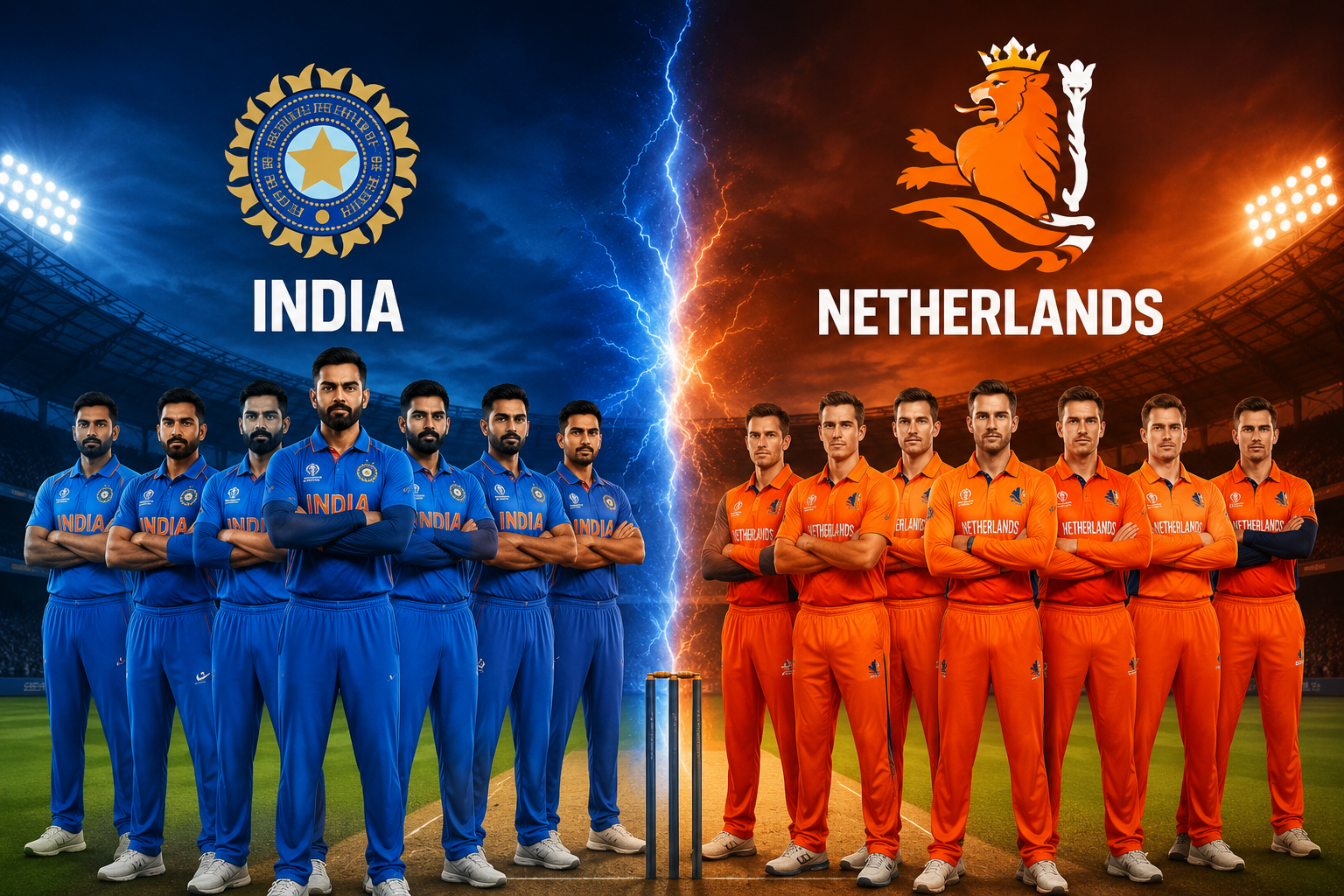
The contest between the India National Cricket Team and the Netherlands National Cricket Team represents a clear clash of experience, structure, and international exposure in modern cricket. India, known for its depth in batting and world class bowling attack, enters every encounter with high expectations and strong winning momentum. Netherlands, on the other hand, brings determination, discipline, and the spirit of associate cricket fighting for recognition on the global stage. Whenever these two teams meet in ICC events, the match becomes more than just a fixture. It turns into a learning curve, a pressure test, and a showcase of contrasting cricketing cultures on the same field.
Recent Matches Table
| Match | Date | Winner | Margin | Format | Venue | Stage |
| Match 10 | 17 Jun 2026 | India Women | 95 runs | T20I | Headingley | Group |
| Match 36 | 18 Feb 2026 | India Men | 17 runs | T20I | Ahmedabad | Group |
| Match 45 | 12 Nov 2023 | India Men | 160 runs | ODI | Bengaluru | League |
| Match 23 | 27 Oct 2022 | India Men | 56 runs | T20I | Sydney | Super 12 |
| Match 34 | 09 Mar 2011 | India Men | 5 wickets | ODI | Delhi | Group |
| Match 11 | 12 Feb 2003 | India Men | 68 runs | ODI | Paarl | Group |
Match Overview Table
| Element | Specification | Location | Toss Choice | First Innings | Second Innings | Winner |
| Men Match | T20 World Cup | Ahmedabad | India Bat | India 193/6 | Netherlands 176/7 | India Men |
| Women Match | T20 World Cup | Headingley | Netherlands Bowl | India 209/5 | Netherlands 114/10 | India Women |
| Umpire One | Sam Nogajski | Field | Decision | Correct | Reviews | Verified |
| Umpire Two | A Paleker | Field | Decision | Correct | Reviews | Verified |
| Referee | R Madugalle | Match | Oversight | Global | Panels | ICC |
| Venue Name | Narendra Modi | Stadium | Capacity | Large | Attendance | Full |
Best Bowling Figures Table
| Bowler | Team | Overs | Maidens | Runs | Wickets | Economy |
| Varun Chakaravarthy | India | 3 | 0 | 14 | 3 | 4.66 |
| Aryan Dutt | Netherlands | 4 | 0 | 19 | 2 | 4.75 |
| Shafali Verma | India | 3.2 | 0 | 20 | 3 | 6.00 |
| Shree Charani | India | 4 | 0 | 19 | 4 | 4.75 |
| Nandani Sharma | India | 3 | 0 | 22 | 2 | 7.33 |
| Logan van Beek | Netherlands | 4 | 0 | 56 | 3 | 14.00 |
Statistical Comparison Table
| Metric | India Men | Netherlands Men | India Women | Netherlands Women | Format Men | Format Women |
| Innings Score | 193 | 176 | 209 | 114 | T20I | T20I |
| Wickets Lost | 6 | 7 | 5 | 10 | 20 Overs | 17.3 Overs |
| Top Runs | 66 | 33 | 74 | 28 | Dube | De Leede |
| Top Wickets | 3 | 3 | 4 | 2 | Chakaravarthy | De Lange |
| Sixes Hit | 13 | 5 | 4 | 0 | Boundary | Count |
| Fours Hit | 11 | 19 | 28 | 13 | Boundary | Count |
Match Result and Player of the Match Table
| Game | Date | Result | Margin | Player of Match | Runs | Wickets |
| T20I Men | 18 Feb 2026 | India Victory | 17 runs | Shivam Dube | 66 | 2 |
| T20I Women | 17 Jun 2026 | India Victory | 95 runs | Smriti Mandhana | 74 | 0 |
| ODI Men | 12 Nov 2023 | India Victory | 160 runs | Shreyas Iyer | 128 | 0 |
| T20I Men | 27 Oct 2022 | India Victory | 56 runs | Suryakumar Yadav | 51 | 0 |
| ODI Men | 09 Mar 2011 | India Victory | 5 wickets | Yuvraj Singh | 51 | 2 |
| ODI Men | 12 Feb 2003 | India Victory | 68 runs | Sachin Tendulkar | 52 | 0 |
Early Encounters and Cricketing Gap Between India and Netherlands
The rivalry began with two teams coming from completely different cricketing backgrounds. One side entered every global tournament as a favorite, while the other fought hard to earn a place among the world’s best teams. Their meetings have always reflected the difference in experience, squad depth, and exposure to high-pressure matches. Despite the gap, every contest has provided valuable learning opportunities for emerging players and memorable moments for supporters. Each encounter has helped the developing side gain confidence against elite opposition while allowing the stronger team to test combinations before bigger challenges. Over time, these meetings have contributed to the growth of international cricket by giving associate nations the chance to compete on the biggest stage. The history between the two teams is not defined only by results but also by determination, improvement, and the spirit of global competition that continues to inspire future generations.
| Year | Tournament | Venue | Result | Highlight |
| 2003 | ICC World Cup | South Africa | India Won | Comfortable victory |
| 2011 | ICC World Cup | India | India Won | Strong batting display |
| 2023 | ICC World Cup | India | India Won | Complete team performance |
| Overall | Head to Head | Multiple Venues | India Ahead | Consistent dominance |
Building Towards the Clash on the Big Stage
Reaching a major international tournament requires years of preparation, and both teams followed very different paths before facing each other. One side regularly competed against the strongest cricket nations, while the other progressed through qualification events and regional competitions. Every successful campaign increased confidence and created excitement among supporters waiting for another opportunity on the global stage. Tournament schedules eventually placed both teams together, turning preparation into reality. Coaches focused on understanding strengths, correcting weaknesses, and selecting balanced playing combinations. Experienced players carried leadership responsibilities, while younger talents looked forward to proving themselves. The anticipation surrounding the contest grew steadily as experts discussed possible strategies and expected performances. By the time match day arrived, both squads understood the importance of delivering disciplined cricket and making the most of every opportunity available.
| Aspect | Team Focus | Preparation | Objective | Outcome |
| Training | Intensive Sessions | Tactical Plans | Peak Performance | Match Ready |
| Selection | Balanced Squad | Player Roles | Stability | Strong Combination |
| Strategy | Opposition Study | Flexible Plans | Early Control | Competitive Start |
| Mindset | Confidence | Team Unity | Positive Cricket | Better Execution |
Pre Match Atmosphere and Psychological Pressure
The atmosphere before the contest was filled with excitement, expectation, and responsibility. Fans eagerly discussed possible playing elevens, individual performances, and tactical battles that could influence the result. Media attention increased as analysts examined recent form, player fitness, and historical performances. Senior players were expected to lead from the front, while younger cricketers prepared for an opportunity to impress on a global stage. Coaches emphasized discipline, communication, and adaptability because even a small mistake could change the momentum of the game. Every player understood that handling pressure would be as important as technical ability. The emotional build-up created a competitive environment where confidence, preparation, and mental strength became essential ingredients for success once the first ball was delivered.
| Factor | Impact | Team Response | Expected Benefit | Result |
| Crowd Support | High Energy | Positive Mindset | Extra Motivation | Better Focus |
| Media Attention | Increased Pressure | Calm Preparation | Confidence | Strong Approach |
| Leadership | Decision Making | Experience | Stability | Better Balance |
| Team Meetings | Tactical Planning | Clear Roles | Smooth Execution | Organized Performance |
Toss, Pitch Conditions and Tactical Expectations
Conditions on match day played an important role in shaping tactical decisions before play began. Captains carefully assessed the pitch surface, weather forecast, and expected behavior throughout the innings before making their choice at the toss. Team management considered batting depth, bowling variations, and fielding strengths while finalizing strategies. A surface offering early movement encouraged disciplined fast bowling, whereas a dry wicket often favored spin during the middle overs. Batters focused on building partnerships before accelerating later in the innings. Bowlers prepared different plans for aggressive hitters and technically sound players. Every tactical decision was based on maximizing available conditions while minimizing risk. The contest ultimately depended on which team adapted more effectively as the pitch changed over the course of the match.
| Condition | Observation | Tactical Choice | Expected Advantage | Match Effect |
| Pitch | Balanced Surface | Bat First | Big Total | Score Building |
| Weather | Clear Sky | Normal Strategy | Consistency | Smooth Play |
| Bowling | Pace and Spin | Rotation | Pressure | Wicket Chances |
| Fielding | Active Positions | Close Support | Run Saving | Better Control |
Top Order Command and Early Momentum Shift
The opening phase established the direction of the contest as the top-order batters looked to settle quickly while maintaining a healthy scoring rate. Early partnerships reduced pressure and allowed confidence to grow with every over. Bowlers searched for movement, disciplined lines, and opportunities to break the opening stand before momentum shifted completely. Good communication between batting partners helped convert singles into doubles and punished loose deliveries with controlled boundary strokes. Field placements constantly changed as captains attempted to create wicket-taking chances without allowing easy scoring opportunities. The first breakthrough became a significant moment because it influenced the tempo of the innings and forced new batters to adjust immediately. Early momentum often shaped the confidence and tactical approach followed during the remainder of the match.
| Phase | Batting Focus | Bowling Plan | Key Objective | Impact |
| Powerplay | Positive Start | Swing Bowling | Early Runs | Momentum |
| Partnership | Strike Rotation | Tight Lines | Stability | Confidence |
| Fielding | Run Saving | Aggressive Fields | Pressure | Limited Boundaries |
| Breakthrough | New Batter | Attack Stumps | Wicket | Momentum Shift |
Middle Overs Control and Spin Domination Phase
The middle overs demanded patience, intelligent shot selection, and tactical awareness from both batting and bowling units. Batters aimed to preserve wickets while steadily increasing the scoring rate through well-placed boundaries and quick running between the wickets. Bowlers concentrated on accuracy, variation, and disciplined lengths to restrict easy scoring opportunities. Spinners played a major role by controlling the pace of the innings and encouraging mistakes through clever flight and turn. Captains adjusted field placements regularly to protect boundaries while creating chances for catches in key positions. Partnerships remained the foundation of success because they allowed steady progress without unnecessary risks. The balance between controlled aggression and disciplined bowling determined which side carried momentum into the closing overs of the match.
| Element | Batting Plan | Bowling Plan | Team Goal | Outcome |
| Partnerships | Build Innings | Break Stands | Control Game | Stable Progress |
| Spin Attack | Rotate Strike | Flight and Turn | Create Chances | Pressure |
| Field Placement | Gap Finding | Catching Positions | Restrict Runs | Better Balance |
| Run Rate | Gradual Increase | Consistency | Finish Strong | Positive Position |
Death Overs Explosion and Final Score Pressure
The closing overs represented the most intense phase of the match as every delivery carried significant importance. Batters shifted into an attacking approach, looking for boundaries through calculated risks and powerful finishing strokes. Bowlers relied on yorkers, slower deliveries, and wide lines to reduce scoring opportunities while protecting the target. Fielders remained alert for catches, run-out chances, and crucial saves near the boundary. Captains constantly adjusted field placements according to batter strengths and changing match situations. Momentum frequently changed within a few overs, making composure and decision-making essential. The final total or successful chase reflected the effectiveness of execution during these pressure-filled moments and often became the defining chapter of the entire contest.
| Overs | Batting Intent | Bowling Variation | Key Focus | Result |
| 41-45 | Controlled Attack | Slower Balls | Build Finish | Higher Run Rate |
| 46-50 | Maximum Boundaries | Yorkers | Limit Damage | Pressure Contest |
| Fielding | Boundary Saving | Quick Throws | Prevent Extras | Better Control |
| Finish | Aggressive Shots | Accurate Execution | Strong Ending | Match Decider |
Conclusion
The India National Cricket Team Vs Netherlands National Cricket Team Match Scorecard reflects a broader story of dominance, growth, and exposure at the international level. India’s consistent performance across batting, bowling, and fielding highlights why they remain one of the strongest teams in world cricket. Netherlands, despite being on the losing side in most encounters, gains valuable experience from competing against elite opposition. These matches help bridge the gap between associate and full member nations. In the end, the fixture stands as a symbol of cricket’s global expansion, where learning, competition, and sporting spirit come together on the same stage.
Frequently Asked Questions
1. Why is the India vs Netherlands match important in cricket?
It is important because it highlights the gap between a top cricketing nation and an associate team while giving Netherlands valuable exposure in ICC events.
2. Has Netherlands ever defeated India in international cricket?
No, Netherlands has not registered a win against India in major international formats so far, but they have gained experience from these encounters.
3. What makes India stronger in this matchup?
India’s strong batting lineup, experienced bowling attack, and deep bench strength make them dominant in most encounters.
4. How does Netherlands benefit from playing India?
Netherlands gains exposure to high-pressure situations, world-class bowling, and top-level batting strategies which help improve their development.
5. Are these matches usually one-sided?
Most matches tend to be one-sided due to the experience and skill gap, but they remain valuable for global cricket growth and competition exposure.
| Read Also: |