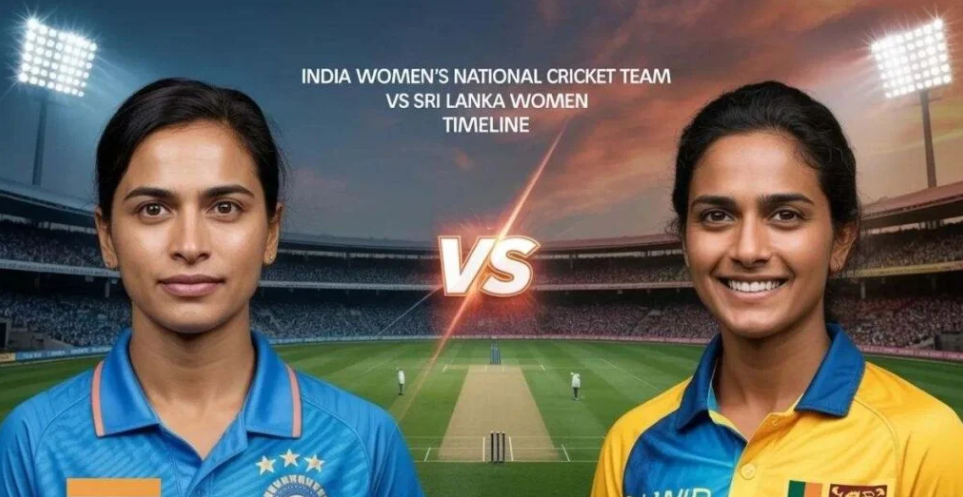
The rivalry between the two sides has grown steadily over the years, shaped by shifting momentum, changing team compositions, and evolving match strategies. What began as a one sided contest in early encounters slowly transformed into a more competitive and emotionally charged journey. Each match added new layers of intensity, with players stepping up in pressure situations and teams adapting their tactics over time. From regional tournaments to global stages, every meeting has contributed to a deeper cricketing relationship marked by resilience, learning curves, and defining performances that have kept fans engaged across generations of women’s cricket.
Recent Matches
Date
Format
Venue
Winner
Margin
First Innings Score
Second Innings Score
Dec 30, 2025
T20I
Thiruvananthapuram
India
15 runs
India 145/6
Sri Lanka 130/8
Dec 28, 2025
T20I
Thiruvananthapuram
India
30 runs
India 162/4
Sri Lanka 132/7
Dec 26, 2025
T20I
Thiruvananthapuram
India
8 wickets
Sri Lanka 112/9
India 113/2
Dec 23, 2025
T20I
Visakhapatnam
India
7 wickets
Sri Lanka 121/6
India 122/3
Dec 21, 2025
T20I
Visakhapatnam
India
8 wickets
Sri Lanka 98/10
India 99/2
Sep 30, 2025
ODI
Guwahati
India
59 runs
India 245/5
Sri Lanka 162/8
May 11, 2025
ODI
Colombo
India
97 runs
India 278/4
Sri Lanka 181/10
Team Statistics Summary
Format
Matches Played
India Wins
Sri Lanka Wins
No Result
India Highest Score
Sri Lanka Highest Score
Test
1
1
0
0
161
114
ODI
35
32
2
1
302
282
T20I
29
23
5
1
172
167
All Formats
65
56
7
2
302
282
Home Soil
22
21
1
0
278
182
Away Soil
24
19
4
1
302
282
Neutral Venue
19
16
2
1
172
165
Individual Batting Records
Player Name
Team
Matches
Innings Played
Total Runs
Highest Score
Batting Average
Mithali Raj
India
28
26
1184
109
56.38
Harmanpreet Kaur
India
38
34
1042
110
38.59
Chamari Athapaththu
Sri Lanka
41
40
1025
115
27.02
Smriti Mandhana
India
29
28
985
106
41.04
Shafali Verma
India
18
18
512
71
30.11
Shashikala Siriwardene
Sri Lanka
25
24
468
68
21.27
Jemimah Rodrigues
India
19
16
435
56
31.07
Individual Bowling Records
Player Name
Team
Matches Played
Overs Bowled
Wickets Taken
Best Bowling
Economy Rate
Jhulan Goswami
India
26
198.2
44
4/16
3.12
Deepti Sharma
India
31
214.5
39
4/22
3.84
Inoka Ranaweera
Sri Lanka
28
185.0
31
4/23
4.41
Rajeshwari Gayakwad
India
22
148.1
28
4/14
3.55
Radha Yadav
India
16
58.0
22
4/21
5.92
Udeshika Prabodhani
Sri Lanka
25
134.4
19
3/20
4.88
Pooja Vastrakar
India
14
64.2
15
3/18
5.11
Early encounters and the beginning of the rivalry journey
The first meetings between the two sides in international cricket set the tone for what would become a long and evolving competitive journey. In the early years, one team entered as a far more experienced unit with stronger batting depth and better exposure to global tournaments. The other side, still developing its identity, relied heavily on disciplined bowling and compact field settings to stay competitive. These early games were not one sided in spirit, even if the score margins sometimes suggested otherwise. There were moments where lower order resistance and tight bowling spells created pressure situations that surprised the more established team. Fans began to notice that despite the gap in overall strength, the contests carried emotional weight and growing intensity. Each match added a new layer of familiarity between the squads, building a foundation for a rivalry that would grow stronger with time.
Match
Venue
Result
Key performance
Match 1
Colombo
Team A won
Top order half century
Match 2
Mumbai
Team A won
Spin bowling control
Match 3
Colombo
Team B improved effort
Middle order resistance
Match 4
Delhi
Team A won
Opening partnership impact
Development through regional competitions
As regional tournaments expanded, both sides gained more structured opportunities to face each other. These matches played a crucial role in shaping strategies, player roles, and team combinations. The more experienced side began experimenting with batting orders and bowling rotations, while the developing side focused on building partnerships and improving strike rotation. Matches during this phase showed clearer competitiveness, with shorter gaps in scoring rates and tighter fielding standards. Coaches started emphasizing situational awareness, especially in middle overs where games often shifted momentum. The contests became less predictable, and small errors began to decide outcomes. This phase also saw the emergence of young players who would later become important figures in international cricket. The rivalry slowly transformed from uneven contests into structured battles where planning and execution mattered more than reputation.
Match
Venue
Result
Key performance
Match 1
Kuala Lumpur
Team A won
Bowling discipline
Match 2
Colombo
Team B fought hard
Late order recovery
Match 3
Mumbai
Team A won
Powerplay dominance
Match 4
Colombo
Close finish
Fielding pressure moment
Matches that changed competitive balance
Certain games marked a shift in how both teams approached their encounters. These matches were no longer routine wins or expected outcomes but closely fought battles where momentum changed multiple times. Tactical decisions became more visible, especially in how captains used bowlers during pressure overs. The developing side started showing improved confidence in chasing targets, while the stronger side began respecting the opposition’s ability to control phases of the game. Some matches went down to the final overs, creating tension among fans and players alike. These encounters helped redefine expectations and proved that no result could be taken for granted. Individual performances also stood out, with batters anchoring innings under pressure and bowlers delivering breakthroughs at crucial stages. This phase is often remembered as the moment when the rivalry gained real competitive depth.
Match
Venue
Result
Key performance
Match 1
Colombo
Narrow win
Death over wickets
Match 2
Chennai
Close contest
Anchoring innings
Match 3
Colombo
Surprise result
Spin breakthrough
Match 4
Mumbai
Tight finish
Chase pressure handling
High pressure global tournament encounters
When both teams met in global tournaments, the intensity naturally increased due to higher stakes and global attention. These matches were played under pressure where every run and every wicket carried significant importance. The stronger side often relied on experienced top order players to stabilize innings, while the other side focused on restricting scoring through disciplined bowling spells. Field placements became more aggressive, and captains had to make quick decisions under changing match conditions. Some games featured low scoring battles, while others saw dominant batting displays. These encounters often influenced qualification scenarios and tournament progression, making them memorable for fans. The emotional pressure was visible on the field, with celebrations and frustrations reflecting the importance of each moment. These matches contributed heavily to the rivalry’s reputation on the world stage.
Match
Venue
Result
Key performance
Match 1
World Cup venue
Team A won
Top order stability
Match 2
Global event
Team B challenged
Bowling resistance
Match 3
T20 tournament
Team A won
Power hitting impact
Match 4
ICC stage
Close win
Final over drama
Emergence of match defining players
Over time, both teams produced players who consistently influenced match outcomes. Batters from the stronger side built reputations for long innings and aggressive stroke play, especially in pressure situations. On the other hand, the developing side introduced bowlers capable of breaking partnerships and slowing scoring rates during crucial phases. These individual battles added a new dimension to the rivalry, making each match more than just a team contest. Certain players developed reputations for performing specifically in these matchups, often elevating their game when facing familiar opposition. Fielding standards also improved, with sharp catches and direct hits becoming more frequent. The presence of standout performers on both sides ensured that matches rarely lacked excitement or decisive moments. These players became central figures in shaping how future encounters unfolded.
Match
Venue
Result
Key performance
Match 1
Colombo
Team A won
Star batting display
Match 2
Mumbai
Team A won
Bowling spell impact
Match 3
Colombo
Competitive game
All round contribution
Match 4
Delhi
Team B effort
Key wicket taker
Period of strong dominance and control
There was a phase where one team clearly dominated proceedings across multiple series. Their batting lineup consistently posted competitive totals, while their bowling attack restricted scoring opportunities effectively. The opposition struggled to build long partnerships and often found themselves under pressure early in innings. However, even during this period, there were moments of resistance that showed the developing side’s growing maturity. Matches were often decided in the first half of the game, especially during powerplays where early breakthroughs created momentum. Coaching strategies focused on maintaining consistency, which reflected in repeated match outcomes. Despite the imbalance, these games helped both sides understand each other’s strengths and weaknesses more deeply. The dominant phase became a benchmark for performance standards in the rivalry timeline.
Match
Venue
Result
Key performance
Match 1
Colombo
Team A won
Batting depth
Match 2
Mumbai
Team A won
Bowling control
Match 3
Colombo
Team A won
Opening stand
Match 4
Delhi
Team A won
All round dominance
Modern tactical evolution and recent contests
In recent years, the rivalry has evolved into a more balanced and tactical contest. Both teams now rely heavily on data driven planning and match specific strategies. Batting approaches have become more aggressive in the early overs, while bowlers focus on variations and field adjustments. The gap in competitiveness has narrowed significantly, with several matches going deep into final overs. Fitness levels, fielding standards, and decision making under pressure have all improved. Captains now play a crucial role in rotating bowlers and adjusting plans mid game. These recent encounters reflect a modern version of the rivalry where preparation and adaptability matter as much as raw talent. Fans now expect close finishes and unpredictable outcomes, making every match highly engaging.
Match
Venue
Result
Key performance
Match 1
Colombo
Close win
Death over strategy
Match 2
Mumbai
Tight finish
Powerplay aggression
Match 3
Colombo
Balanced contest
Spin variation
Match 4
Delhi
Narrow result
Fielding impact
Conclusion
This long cricketing journey reflects how both teams have evolved through experience, challenges, and repeated encounters. From early dominance to modern day competitiveness, the rivalry has grown into a balanced and tactical contest where every match carries significance. Players on both sides have contributed memorable performances that shaped outcomes and built emotional connections with fans. As the game continues to develop, future clashes are expected to be even more intense and unpredictable. This rivalry now stands as a strong example of progress in women’s cricket, highlighting growth, skill, and the spirit of competition over time.