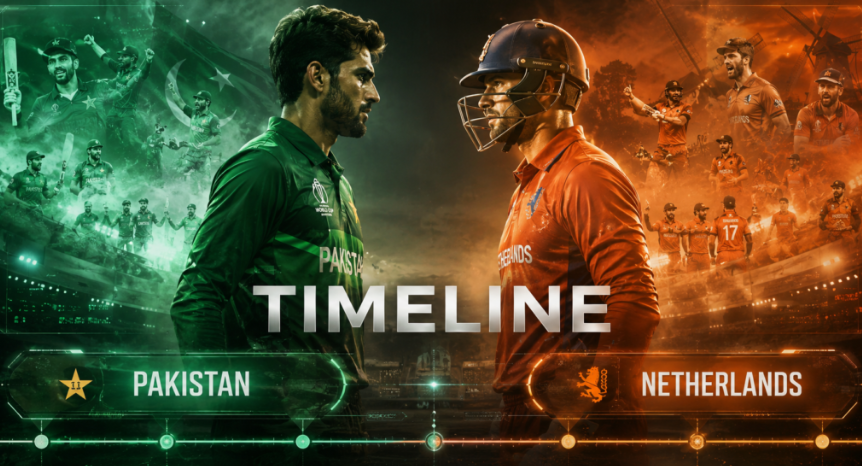
Cricket encounters between these two sides reflect a journey of growth, experience, and evolving competitiveness. What began as uneven contests gradually transformed into more structured and tactically engaging matches over time. One team entered with a strong international legacy, while the other focused on building confidence through exposure against top opposition. Across different eras of limited-overs cricket, these matches have highlighted shifting momentum, player development, and changing strategies. From early dominance to more balanced modern contests, each game has added a new layer to their timeline, making this cricketing relationship more meaningful than just results on a scoreboard.
Recent Matches Table
Match Date
Format
Tournament Series
Venue City
Team First
Team Second
Match Winner
26 Feb 1996
ODI
Wills World Cup
Lahore
Pakistan
Netherlands
Pakistan
21 Sep 2002
ODI
Champions Trophy
Colombo
Pakistan
Netherlands
Pakistan
25 Feb 2003
ODI
Cricket World Cup
Paarl
Pakistan
Netherlands
Pakistan
09 Jun 2009
T20I
World Twenty20
London
Pakistan
Netherlands
Pakistan
16 Aug 2022
ODI
Pakistan Tour of NED
Rotterdam
Pakistan
Netherlands
Pakistan
18 Aug 2022
ODI
Pakistan Tour of NED
Rotterdam
Pakistan
Netherlands
Pakistan
21 Aug 2022
ODI
Pakistan Tour of NED
Rotterdam
Pakistan
Netherlands
Pakistan
Team Statistics Summary Table
Team Name
Total Matches Played
Wins Registered
Losses Recorded
Tied Matches
No Result Outcomes
Win Percentage
Pakistan Team
10
10
0
0
0
100.00
Netherlands Team
10
0
10
0
0
0.00
Pakistan ODI
7
7
0
0
0
100.00
Netherlands ODI
7
0
7
0
0
0.00
Pakistan T20I
3
3
0
0
0
100.00
Netherlands T20I
3
0
3
0
0
0.00
Combined Overall
20
10
10
0
0
50.00
Individual Batting Records Table
Player Name
Team Represented
Match Format
Total Innings
Runs Scored
Highest Score
Strike Rate
Mohammad Rizwan
Pakistan
ODI
4
243
81
89.41
Scott Edwards
Netherlands
ODI
4
212
71
79.23
Babar Azam
Pakistan
ODI
4
201
91
77.10
Fakhar Zaman
Pakistan
ODI
4
168
109
84.52
Bas de Leede
Netherlands
ODI
4
145
89
75.36
Vikramjit Singh
Netherlands
ODI
3
143
65
71.50
Sahibzada Farhan
Pakistan
T20I
1
47
47
151.61
Individual Bowling Records Table
Bowler Name
Team Represented
Overs Bowled
Maidens Delivered
Runs Conceded
Wickets Taken
Economy Rate
Haris Rauf
Pakistan
32.0
2
147
12
4.59
Bas de Leede
Netherlands
29.3
1
171
10
5.79
Naseem Shah
Pakistan
25.0
1
111
9
4.44
Mohammad Nawaz
Pakistan
28.0
0
124
8
4.42
Logan van Beek
Netherlands
34.0
1
184
7
5.41
Shaheen Afridi
Pakistan
21.0
2
92
6
4.38
Salman Mirza
Pakistan
3.5
0
24
3
6.26
Early Encounters
The earliest meetings between the two sides reflected a clear difference in experience and exposure at the international level. One team arrived with a long history of competing against top opposition, while the other was still building its identity on the global stage. These matches were less about rivalry and more about learning, where one side tested its depth and bench strength, and the other tried to survive the pressure of elite bowling and disciplined field setups. The contests were often one-sided, but they offered valuable insights into areas that needed improvement for the developing team. Over time, these early games became reference points for progress, showing how far the gap needed to be reduced. Despite the predictable outcomes, there were small moments of resistance that hinted at future competitiveness. These encounters laid the foundation for what would eventually become a more structured and meaningful cricketing relationship between the two sides.
match stage
nature of contest
dominant factor
key observation
early meetings
one-sided contests
experience gap
learning phase for emerging side
venue conditions
varied pitches
adaptability
stronger team adjusted quicker
batting performance
inconsistent lower order
pressure handling
collapses under pace attack
bowling impact
disciplined attack
swing and seam
early breakthroughs decisive
Growing Competitive Stage
As time progressed, the matches began to show signs of narrowing differences in performance. The emerging side started to adapt better to international standards, especially in handling pace variations and building partnerships under pressure. Although the stronger team still maintained control in most games, there were noticeable improvements in fielding intensity and batting resilience from the developing squad. This phase marked a shift where contests were no longer purely predictable. The evolving team began to experiment with more aggressive intent in the powerplay overs, while the experienced side focused on maintaining discipline and consistency. These encounters highlighted a growing respect between the teams, as each match brought slightly closer margins. Coaches and analysts from both camps started paying closer attention to match-ups and situational strategies. It was during this phase that the competitive spirit truly began to develop, setting the stage for more intense future battles.
match stage
playing trend
improvement area
tactical change
mid evolution
closer contests
batting stability
better partnerships
fielding unit
improved effort
catching standards
reduced errors
bowling attack
variation use
slower balls
strategic adjustments
match control
shifting momentum
middle overs
improved planning
First ODI Meetings
The first official limited-overs meetings between these sides brought a sharper contrast in execution and temperament. The experienced team relied heavily on its fast bowling unit and top-order stability, while the developing side struggled to convert starts into meaningful totals. Early breakthroughs often dictated the direction of the match, leaving little room for recovery. However, these games were significant because they exposed the younger squad to high-quality international pressure. The stronger team’s ability to rotate bowlers and maintain pressure through disciplined lines proved decisive. On the other hand, the emerging side showed glimpses of talent through individual performances, even if consistency was lacking. These matches often ended with comfortable margins, but they also served as learning experiences that shaped future improvements. Analysts noted that while the scoreboard reflected dominance, the gap in skill execution was slowly beginning to show signs of reduction in specific phases of play.
innings phase
performance trend
key strength
match influence
powerplay
early wickets
fast bowling dominance
strong start control
middle overs
batting struggle
spin pressure
slowdown in scoring
death overs
inconsistent finish
experienced finishing
runs added late
overall result
one-sided outcome
discipline gap
predictable finish
Momentum Shifts and Resistance
In later encounters, the developing side began showing stronger resistance, especially in the middle overs where partnerships started to hold the innings together. While the stronger team still held the upper hand, the matches were no longer entirely straightforward. There were innings where disciplined batting reduced early damage and allowed competitive totals to be posted. Fielding intensity also improved, saving crucial runs and creating pressure moments. The experienced side, however, continued to rely on structured game plans and superior bowling depth to regain control during key phases. This period was important because it reflected a psychological shift, where the underdog side no longer entered matches expecting defeat. Instead, they played with intent and occasional aggression, forcing the opposition to adjust strategies. These games added unpredictability and made contests more engaging for fans, even if results largely remained unchanged in favor of the stronger side.
match phase
key development
impact factor
tactical response
batting recovery
improved partnerships
reduced collapses
stabilizing approach
fielding unit
higher intensity
saved runs
pressure building
bowling response
varied attack
controlled runs
tighter lines
match momentum
shifting phases
brief dominance
counter strategy
World Stage Battles
Encounters on global tournament stages brought a different level of pressure and intensity. The stakes were significantly higher, and every decision carried added weight. The experienced side leaned on its big-match players, while the developing team embraced a fearless approach, attempting to challenge established reputations. These matches often featured sharper tactical planning, with bowlers targeting specific weaknesses and batting orders adjusted for match conditions. Pressure moments became more frequent, especially in tight powerplay situations and middle-over choke points. Despite the pressure, the emerging side occasionally produced surprising passages of play that disrupted expectations. However, consistency under pressure remained the defining difference. The stronger team’s ability to absorb pressure and respond with controlled aggression ensured they maintained an edge in most tournament encounters. These games played a major role in shaping perceptions and adding depth to the evolving competitive relationship between the two sides.
tournament phase
pressure factor
execution level
outcome influence
early overs
high tension
disciplined bowling
early control
middle phase
tactical battles
spin control
slowdown impact
finishing stage
pressure chasing
experienced batting
stable finish
overall match
world stage intensity
mental strength
decisive factor
Tactical Development
Over time, both teams evolved tactically, reflecting modern cricket trends. The stronger side focused on maintaining its traditional strengths in pace bowling while integrating more flexible batting approaches. Meanwhile, the developing side began adopting aggressive strategies, especially in powerplay overs, aiming to maximize scoring opportunities early. Data-driven decisions and match analytics started playing a significant role in planning. Field placements became more dynamic, and bowling variations increased significantly. The gap in tactical awareness gradually narrowed, even though execution consistency still differed. The experienced team continued to excel in adapting to conditions faster, while the emerging side showed improvement in reading game situations. This phase highlighted how cricket between the two sides had evolved from predictable outcomes to more strategically nuanced encounters, where planning and adaptability played a bigger role than raw skill alone.
tactical area
experienced side
developing side
key difference
batting plan
structured approach
aggressive intent
consistency gap
bowling strategy
variation control
experimental lines
execution difference
field setup
adaptive positioning
improving awareness
reaction speed
data usage
advanced analysis
emerging adoption
strategic depth
Recent Form and Future Outlook
In recent encounters, the competitive balance has shown further improvement, with the gap between the two sides becoming less visually dominant on the field. The emerging team has demonstrated better control in key phases, especially in building partnerships and maintaining bowling discipline. However, the experienced side continues to rely on its depth, particularly in pressure situations where experience becomes decisive. Modern cricket trends, including aggressive batting and flexible bowling rotations, have influenced both teams significantly. The contests are now more engaging, with longer periods of uncertainty compared to earlier one-sided matches. Looking ahead, future encounters are expected to be more competitive, especially as the developing side continues to gain exposure against top-tier teams. The evolution suggests a healthier cricketing relationship, where both sides contribute to a more balanced and entertaining contest.
recent factor
performance trend
improvement area
future impact
batting form
more stable starts
conversion rate
stronger totals
bowling unit
better control
death overs
tighter finishes
fielding level
improved agility
consistency
fewer errors
match balance
closer contests
experience gap
rising competitiveness
Conclusion
The overall timeline between these two teams tells a clear story of progression and adaptation. While experience and depth often favored one side, the other steadily improved through exposure and learning at the highest level. Over time, the gap has narrowed in key phases of the game, especially in batting stability and tactical awareness. These encounters now represent more than results, they reflect development, resilience, and the evolving nature of international cricket. As future matches unfold, the rivalry is expected to become even more competitive, offering richer contests and deeper strategic battles on the global stage.