Table of Contents
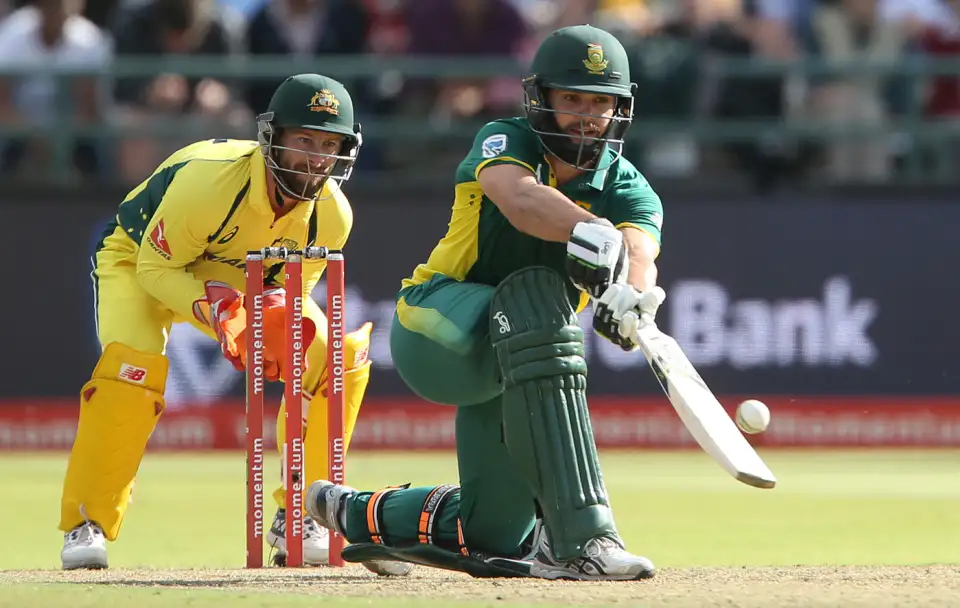
The South Africa National Cricket Team Vs Australia Cricket Team Timeline is more than a sequence of matches and results. It is a story of two proud cricket nations that have repeatedly pushed each other to the limits of excellence. From South Africa’s return to international cricket in the early 1990s to unforgettable World Cup battles, dramatic Test series, and the famous 438-run chase, this rivalry has produced some of the most compelling chapters in cricket history. Few contests combine skill, intensity, controversy, and mutual respect quite like South Africa versus Australia, making it one of the defining rivalries of modern cricket.
Why South Africa and Australia Created a Unique Cricket Rivalry
Cricket rivalries often emerge through geography or history. South Africa and Australia developed theirs through competitiveness.
Australia spent much of the late twentieth century establishing itself as the world’s dominant cricket force. South Africa, after returning from international isolation in 1991, quickly emerged as a team capable of challenging that dominance.
What made the rivalry special was the similarity in approach. Both teams valued aggressive fast bowling, athletic fielding, mental toughness, and a relentless desire to win. Matches between them rarely felt ordinary.
Unlike some rivalries dominated by one era, South Africa and Australia have exchanged periods of superiority. Players from both sides frequently acknowledged that victories against the other carried extra significance because they were earned against elite opposition.
Key Characteristics of the Rivalry
| Aspect | South Africa | Australia |
| Traditional Strength | Fast Bowling | Fast Bowling |
| Playing Style | Aggressive and Disciplined | Aggressive and Dominant |
| World Cup Success | Limited | Extensive |
| Test Reputation | Resilient | Ruthless |
| Fielding Standards | Elite | Elite |
The similarities between the teams created closely fought contests that often went down to the final session or final over.
South Africa’s Return and Early Encounters (1991–1995)
South Africa returned to international cricket in 1991 after years of isolation. Australia was among the first major opponents they faced regularly.
These early contests were important because they helped establish South Africa’s credibility in world cricket. Players such as Kepler Wessels, Hansie Cronje, and Allan Donald faced Australian stars including Mark Taylor, David Boon, and Shane Warne.
Early Timeline Highlights
| Year | Event |
| 1991 | South Africa returns to international cricket |
| 1992 | Teams meet during World Cup era |
| 1993 | First major bilateral contests |
| 1994 | Competitive ODI battles emerge |
| 1995 | Rivalry begins gaining global attention |
During this period, Australia remained the stronger side overall, but South Africa showed enough quality to suggest they would become a major threat in the coming years.
The foundation of the rivalry was being built through hard-fought contests rather than headline-grabbing drama.
The Rise of Allan Donald and Shane Warne’s Influence
Every great rivalry requires iconic performers.
For South Africa, Allan Donald became the symbol of competitiveness. His pace, aggression, and ability to challenge Australia’s batting lineup made him one of the most feared bowlers of his era.
Australia had Shane Warne, whose mastery of leg-spin transformed matches and series.
Legendary Players of the 1990s Rivalry
| South Africa | Australia |
| Allan Donald | Shane Warne |
| Hansie Cronje | Mark Taylor |
| Jonty Rhodes | Steve Waugh |
| Gary Kirsten | Glenn McGrath |
| Shaun Pollock | Ricky Ponting |
The rivalry gained depth because it was never limited to one discipline. Every match featured elite batsmen, world-class bowlers, and exceptional fielders.
Jonty Rhodes’ athleticism and Australia’s relentless professionalism created contests that captivated cricket fans around the world.
The 1999 World Cup Semi-Final: Cricket’s Greatest Tie
No discussion of the South Africa National Cricket Team Vs Australia Cricket Team Timeline is complete without revisiting the dramatic 1999 Cricket World Cup semi-final.
Many analysts still consider it one of the greatest matches ever played.
Australia scored 213 before South Africa began their chase. The match swung repeatedly as wickets fell and pressure mounted.
The defining moment came with South Africa needing one run and Lance Klusener seemingly guiding his team to victory.
Then chaos unfolded.
A misunderstanding between Klusener and Allan Donald resulted in a run-out. The match ended in a tie, but Australia progressed due to superior tournament standings.
1999 Semi-Final Snapshot
| Match Detail | Result |
| Venue | Edgbaston |
| Australia Score | 213 |
| South Africa Score | 213 |
| Result | Tie |
| Team Advancing | Australia |
The impact extended far beyond the scoreboard.
Australia gained momentum and won the World Cup. South Africa suffered one of the most painful moments in cricket history.
Even today, the match remains the emotional centerpiece of this rivalry.
Australia’s Dominance During the Golden Era (2000–2005)
The early 2000s belonged largely to Australia.
Under Steve Waugh and later Ricky Ponting, Australia built one of the greatest cricket teams ever assembled.
Players such as Glenn McGrath, Adam Gilchrist, Matthew Hayden, and Brett Lee formed a lineup that overwhelmed most opponents.
Australia’s Strength During the Era
| Category | Australia |
| World Cup Titles | 2003, 2007 |
| Test Ranking | No. 1 |
| ODI Ranking | No. 1 |
| Winning Percentage | Among highest ever |
South Africa remained competitive but often found themselves facing a machine-like Australian side.
Yet these defeats helped shape future South African teams. The Proteas developed greater resilience and tactical awareness through repeated encounters against cricket’s benchmark side.
The 438 Miracle: The Greatest ODI Chase Ever
If one match symbolizes South Africa’s ability to challenge Australian dominance, it is the famous Johannesburg ODI in March 2006.
Australia appeared unbeatable after scoring 434 runs.
At the time, it was the highest ODI total ever recorded.
Most teams would have surrendered mentally before beginning the chase. South Africa chose a different path.
Led by Herschelle Gibbs, who scored a remarkable 175, the Proteas launched an extraordinary counterattack.
438 Match Statistics
| Team | Score |
| Australia | 434/4 |
| South Africa | 438/9 |
| Result | South Africa won |
| Venue | Johannesburg |
| Date | March 2006 |
The match rewrote cricket’s understanding of what was possible in limited-overs cricket.
It demonstrated that even Australia’s strongest teams could be challenged and defeated.
For many fans, it remains the greatest ODI ever played.
Test Battles That Defined an Era
While limited-overs cricket often grabs headlines, the rivalry’s deepest roots lie in Test cricket.
Between 2008 and 2014, South Africa enjoyed perhaps its strongest period against Australia.
The Proteas achieved historic Test series victories both home and away.
Memorable Test Series Results
| Year | Winner |
| 2008–09 | South Africa |
| 2011–12 | Drawn |
| 2012–13 | South Africa |
| 2014 | Australia |
South Africa’s success was built around exceptional pace attacks featuring:
- Dale Steyn
- Morne Morkel
- Vernon Philander
These bowlers challenged Australia’s batsmen in ways few attacks could.
The contests felt like heavyweight championship fights, with every session carrying significance.
World Cup Encounters and Heartbreaks
World Cups have repeatedly shaped the narrative between these teams.
Major ICC Tournament Meetings
| Tournament | Result |
| 1999 World Cup Semi-Final | Australia advanced |
| 2007 World Cup Semi-Final | Australia won |
| 2023 World Cup Semi-Final | Australia won |
| Champions Trophy Meetings | Mixed Results |
A recurring theme has been Australia’s ability to win crucial knockout encounters.
South Africa often entered tournaments with strong squads and impressive form, only to encounter Australia in decisive matches.
The 2023 World Cup semi-final continued that pattern, reinforcing Australia’s reputation as one of cricket’s most formidable tournament teams.
These results contribute significantly to the emotional weight of the rivalry.
The Sandpaper Scandal Series and Its Impact
Not all chapters in the timeline are celebrated.
The 2018 Test series became one of cricket’s most controversial moments.
During the third Test in Cape Town, Australian player Cameron Bancroft was caught attempting to alter the condition of the ball.
The incident led to major consequences.
Key Outcomes of the 2018 Controversy
| Consequence | Impact |
| Player Suspensions | Significant |
| Leadership Changes | Major |
| Global Attention | Massive |
| Cricket Integrity Debate | Renewed |
The scandal overshadowed what had otherwise been a fiercely competitive series.
It also marked a turning point for Australian cricket, prompting reflection and organizational change.
The rivalry continued, but the series became remembered as much for controversy as for cricket.
Modern Era: Renewed Competition Across Formats
The current phase of the rivalry looks different from previous decades.
Australia continues to be one of the strongest cricket nations globally, while South Africa has rebuilt around a new generation of talent.
Players such as:
- Kagiso Rabada
- Marco Jansen
- Temba Bavuma
have become key figures for South Africa.
Australia relies on stars including:
- Pat Cummins
- Steve Smith
- Travis Head
- Mitchell Starc
Modern Rivalry Comparison
| Category | South Africa | Australia |
| Fast Bowling Depth | Excellent | Excellent |
| Test Strength | Strong | Elite |
| ODI Competitiveness | High | Elite |
| T20 Potential | High | High |
The rivalry remains relevant because both teams continue producing world-class cricketers.
Every bilateral series still attracts significant global attention.
Conclusion
The South Africa National Cricket Team Vs Australia Cricket Team Timeline tells the story of two cricket powers constantly challenging each other to improve. From South Africa’s return to international cricket in 1991 to the unforgettable 1999 World Cup semi-final, the historic 438-run chase, intense Test series, and modern ICC tournament clashes, this rivalry has repeatedly delivered unforgettable moments. What makes it special is not simply the number of matches played but the quality, intensity, and significance of those encounters. As new generations emerge, the South Africa National Cricket Team Vs Australia Cricket Team Timeline continues to grow, ensuring this remarkable rivalry remains one of cricket’s most compelling stories.
Frequently Asked Questions
What is the most famous match in the South Africa vs Australia rivalry?
The most famous match is generally considered the 1999 Cricket World Cup semi-final at Edgbaston. The game ended in a dramatic tie after a last-over run-out involving Lance Klusener and Allan Donald. Australia advanced to the final because of their superior performance earlier in the tournament. The match remains one of cricket’s most dramatic finishes and is frequently ranked among the greatest games ever played due to its tension, significance, and emotional impact.
Why is the 438-run chase so important in cricket history?
South Africa’s successful chase of Australia’s 434 in 2006 transformed the perception of ODI cricket. Before that match, a score above 400 was viewed as virtually impossible to chase. Herschelle Gibbs’ extraordinary innings and South Africa’s fearless batting approach proved otherwise. The match influenced future ODI strategies, encouraging teams to attack aggressively and believe that even the largest totals could be overcome.
Who are the greatest players in this rivalry?
Several legends have shaped the rivalry. For South Africa, Allan Donald, Jacques Kallis, AB de Villiers, Dale Steyn, and Graeme Smith stand out. Australia has been represented by icons such as Shane Warne, Ricky Ponting, Glenn McGrath, Steve Waugh, and Michael Clarke. Their performances elevated the rivalry and created unforgettable individual battles that complemented the team contests.
How successful has South Africa been against Australia in Test cricket?
South Africa has enjoyed several successful periods against Australia, particularly between 2008 and 2014. During that era, the Proteas won important Test series both at home and in Australia. Led by players such as Graeme Smith, Dale Steyn, Morne Morkel, and Vernon Philander, South Africa became one of the few teams capable of consistently challenging Australia’s Test dominance.
What role has Australia played in South Africa’s cricket development?
Australia has often served as a benchmark for South African cricket. Competing against world-class Australian teams forced South Africa to improve tactically, mentally, and technically. Many South African players have stated that success against Australia carried special significance because it demonstrated their ability to compete with the best team in the world. The rivalry helped shape South Africa into a modern cricket powerhouse.
How have World Cups influenced the rivalry?
World Cup encounters have significantly shaped perceptions of the rivalry. Australia has often emerged victorious in crucial knockout matches, including the famous 1999 and 2007 World Cup semi-finals and the 2023 World Cup semi-final. These victories strengthened Australia’s reputation as a tournament powerhouse while adding emotional significance to future meetings between the teams.
What makes South Africa and Australia similar cricket teams?
Both nations traditionally prioritize fast bowling, athletic fielding, mental toughness, and aggressive cricket. Their cricket cultures reward competitiveness and resilience. Because their strengths often mirror each other, matches frequently become intense tactical battles. This similarity in philosophy is one of the main reasons the rivalry has remained compelling across multiple generations.