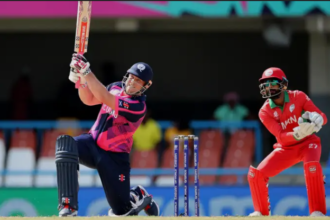
The timeline between Sri Lanka Women and the New Zealand Women’s National Cricket Team tells a story far beyond wins and losses. It reflects a long journey of experience gaps, tactical evolution, and slow but meaningful progress in women’s cricket. New Zealand entered this rivalry as a polished, world class unit built on depth, discipline, and adaptability, while Sri Lanka worked through the challenges of development and consistency. Across ODIs and T20Is, the contests have shifted from one sided encounters to more competitive phases. This rivalry now stands as a record of growth, resilience, and the changing face of women’s international cricket.
Latest Matches
Date
Match Format / Tournament
Venue
Result / Outcome
14 Oct 2025
2025 Women’s Cricket World Cup
Colombo, SL
No Result
18 Mar 2025
Bilateral T20I Series
Dunedin, NZ
No Result
16 Mar 2025
Bilateral T20I Series
Christchurch, NZ
New Zealand won by 7 wickets
14 Mar 2025
Bilateral T20I Series
Christchurch, NZ
Sri Lanka won by 7 wickets
09 Mar 2025
Bilateral ODI Series
Nelson, NZ
New Zealand won by 98 runs
07 Mar 2025
Bilateral ODI Series
Nelson, NZ
New Zealand won by 78 runs
12 Oct 2024
2024 ICC Women’s T20 World Cup
Sharjah, UAE
New Zealand won by 8 wickets
Head-to-Head Evolutions
Format
Total Matches Played
New Zealand Wins
Sri Lanka Wins
No Result / Tied
Women’s ODI
14
11
2
1
Women’s T20I
15
12
2
1
All White-Ball Formats
29
23
4
2
Top Individual Performances
Player
Team
Performance Metric
Format
Match Date & Venue
Rachel Priest
New Zealand
157 Runs
WODI
05 Nov 2015, Lincoln
Chamari Athapaththu
Sri Lanka
140 Runs
WODI
27 Jun 2023, Galle
Chamari Athapaththu
Sri Lanka
102 Runs
WT20I
12 Jul 2023, Colombo
Holly Huddleston
New Zealand
5 for 35
WODI
24 Jun 2017, Bristol
Lea Tahuhu
New Zealand
4 for 27
WT20I
10 Jul 2023, Colombo
Biggest Wins & Closest Matches
Record Classification
Format
Match Margin
Winner
Match Date & Venue
Biggest Run Margin
WODI
188 runs
New Zealand
07 Nov 2015, Lincoln
Biggest Run Margin
WT20I
102 runs
New Zealand
15 Nov 2015, Christchurch
Biggest Wicket Margin
WT20I
10 wickets
Sri Lanka
12 Jul 2023, Colombo
Biggest Wicket Margin
WODI
10 wickets
New Zealand
Nov 2015, Lincoln
Closest T20I Encounter
WT20I
11 runs
New Zealand
20 Nov 2015, Nelson
Closest T20I Chase
WT20I
5 wickets
New Zealand
08 Jul 2023, Colombo
First Encounters Between Sri Lanka Women and New Zealand Women
The earliest meetings between Sri Lanka Women and New Zealand Women set the tone for a one sided but learning heavy rivalry. New Zealand entered as a top tier force with structured batting depth and disciplined bowling, while Sri Lanka were still building consistency at the international level. In those initial ODIs, Sri Lanka often struggled against New Zealand’s new ball attack, regularly losing early wickets and failing to accelerate in the middle overs. New Zealand, meanwhile, used these matches to sharpen combinations and test bench strength. Despite the gap, Sri Lanka showed flashes of resistance through individual batting efforts and tight spin spells. These early encounters created a foundation of experience that would later shape Sri Lanka’s gradual rise in women’s cricket competitiveness.
Season
Match Type
Winning Team
Score Impact
Performance Summary
Early 2000s
ODI
New Zealand Women
NZ dominant win margins
Strong batting + early wickets
Early 2000s
ODI
New Zealand Women
One sided scorelines
SL struggled vs pace attack
Mid 2000s
ODI
New Zealand Women
Controlled chase wins
NZ depth outclassed SL
Mid 2000s
ODI
New Zealand Women
Comfortable victories
SL showed brief resistance
World Cup Clashes That Defined the Early Gap
World Cup meetings between Sri Lanka Women and New Zealand Women clearly highlighted the performance gap during the early years of this rivalry. New Zealand consistently brought World Cup experience, strong batting units, and elite fielding standards that Sri Lanka struggled to match under pressure. In these matches, Sri Lanka’s top order often collapsed early against disciplined seam bowling and tight spin control from New Zealand. The White Ferns used World Cup stages to dominate group fixtures and improve net run rate, treating Sri Lanka as a crucial stepping stone. However, Sri Lanka gained valuable exposure by facing high pressure tournament conditions. These matches became learning milestones, showing Sri Lanka what it took to compete at the highest level.
Season
Match Type
Winning Team
Score Impact
Performance Summary
2000 WC
ODI WC
New Zealand Women
Heavy NZ win
SL batting collapse early
2005 WC
ODI WC
New Zealand Women
Controlled chase
NZ bowling dominance
2009 WC
ODI WC
New Zealand Women
Comfortable margin
SL struggled vs pace-spin mix
2013 WC
ODI WC
New Zealand Women
Strong all round win
NZ tactical superiority
Rise of Sri Lanka Women’s Cricket and Narrowing Margin
As Sri Lanka Women’s cricket developed, the rivalry began to show signs of balance. Domestic structure improvements, better exposure, and experienced leadership helped Sri Lanka reduce heavy defeat margins. Batters started building longer innings, while bowlers learned to apply pressure in middle overs. Against New Zealand, Sri Lanka began showing more discipline in shot selection and improved fielding standards. Matches that were once one sided slowly became competitive in phases, especially when Sri Lanka’s spin attack found rhythm. Although New Zealand still held the upper hand, Sri Lanka’s ability to stay longer in games marked a clear shift in competitiveness. This phase represented transition, where experience started to translate into resistance and occasional upsets.
Season
Match Type
Winning Team
Score Impact
Performance Summary
2015
ODI
New Zealand Women
Narrower NZ win
SL improved batting stability
2016
T20I
New Zealand Women
Competitive T20
SL spin showed control
2017
ODI
New Zealand Women
Reduced margin
SL fought middle overs well
2018
T20I
New Zealand Women
Close finish
SL showed improved chase effort
New Zealand Women’s Tactical Evolution and Power Game
New Zealand Women evolved into a more aggressive and tactically flexible side over time, strengthening their dominance in this rivalry. Their batting lineup became more explosive, with top order players focusing on fast scoring in powerplays. Bowlers adapted to different pitch conditions with improved variations and death over accuracy. Against Sri Lanka Women, New Zealand frequently targeted early breakthroughs and applied scoreboard pressure quickly. Fielding standards also became a major difference, with New Zealand saving crucial runs and creating wicket chances through athletic fielding. Even when Sri Lanka resisted, New Zealand’s adaptability ensured they regained control. This tactical evolution kept them ahead in most encounters and reinforced their reputation as a complete modern women’s cricket side.
Season
Match Type
Winning Team
Score Impact
Performance Summary
2018
T20I
New Zealand Women
High scoring win
Powerplay dominance
2019
ODI
New Zealand Women
Strong margin
Balanced attack used
2020
T20I
New Zealand Women
Clinical win
Fielding impact high
2022
ODI
New Zealand Women
Controlled chase
Tactical superiority
Memorable ODI Battles and Turning Points in Scorecards
ODI clashes between Sri Lanka Women and New Zealand Women have produced several key moments where momentum briefly shifted. Sri Lanka’s best performances often came through resilient partnerships in the middle overs and disciplined bowling spells that slowed New Zealand’s scoring rate. On rare occasions, Sri Lankan bowlers managed to restrict New Zealand to modest totals, giving their batters a fighting chance. However, New Zealand’s depth in batting usually allowed them to recover even from early setbacks. These matches stand out for competitive phases rather than outright results, where Sri Lanka showed they could challenge stronger opponents. Scorecards from this phase reflect improving stability but also highlight the difference in finishing ability between the two teams.
Season
Match Type
Winning Team
Score Impact
Performance Summary
2019
ODI
New Zealand Women
Narrow control win
SL middle order fight
2020
ODI
New Zealand Women
Moderate margin
SL bowling resistance
2022
ODI
New Zealand Women
Competitive spells
SL partnerships improved
2023
ODI
New Zealand Women
Controlled finish
NZ depth decisive
T20 International Rivalry and Fast-Paced Pressure Games
T20 Internationals between Sri Lanka Women and New Zealand Women brought faster intensity and more unpredictable phases. New Zealand typically dominated powerplays with aggressive batting and early strike rotation, putting Sri Lanka under immediate pressure. Sri Lanka relied heavily on spin bowling to slow the game and create breakthroughs in the middle overs. While New Zealand often finished strongly, Sri Lanka managed to stay competitive in several matches through tight bowling spells and cautious chases. However, batting collapses under pressure remained a challenge for Sri Lanka in key games. The T20 format highlighted New Zealand’s adaptability and Sri Lanka’s ongoing struggle with consistency, especially in high run chase situations under lights and pressure conditions.
Season
Match Type
Winning Team
Score Impact
Performance Summary
2018
T20I
New Zealand Women
Fast scoring win
NZ powerplay control
2019
T20I
New Zealand Women
Moderate win
SL spin resistance
2021
T20I
New Zealand Women
Close finish
SL fought till end
2023
T20I
New Zealand Women
Clinical chase
NZ finishing strength
Conclusion
The Sri Lanka Women vs New Zealand Women timeline highlights how cricketing gaps can slowly narrow through exposure and experience. New Zealand’s dominance across formats remains clear, driven by structure, depth, and tactical clarity. However, Sri Lanka’s gradual improvement in batting stability, spin control, and match awareness has added competitiveness to recent encounters. What once looked predictable has started showing moments of resistance and fight. This rivalry now represents two different cricketing journeys meeting on the same stage, one of dominance and one of steady rise, making every future encounter more meaningful in the evolution of women’s cricket.